

New Construction Property Taxes in Cibolo & Schertz: The First-Year Trap in 2026
Key Takeaways
- Appraisal districts value a new build as it stood on January 1, so the first bill often covers little more than the lot.
- The following January 1 picks up the finished home, and escrow sized to a lot-only bill can come up thousands short.
- Start with the full combined rate, about $1.92 to $1.93 per $100 in Cibolo and Schertz for 2025, subtract the $140,000 school exemption, add any MUD or PID levy, and confirm current rates.
- File your homestead exemption after move-in, ask your lender about escrowing for the finished home, and protest a high first appraisal.
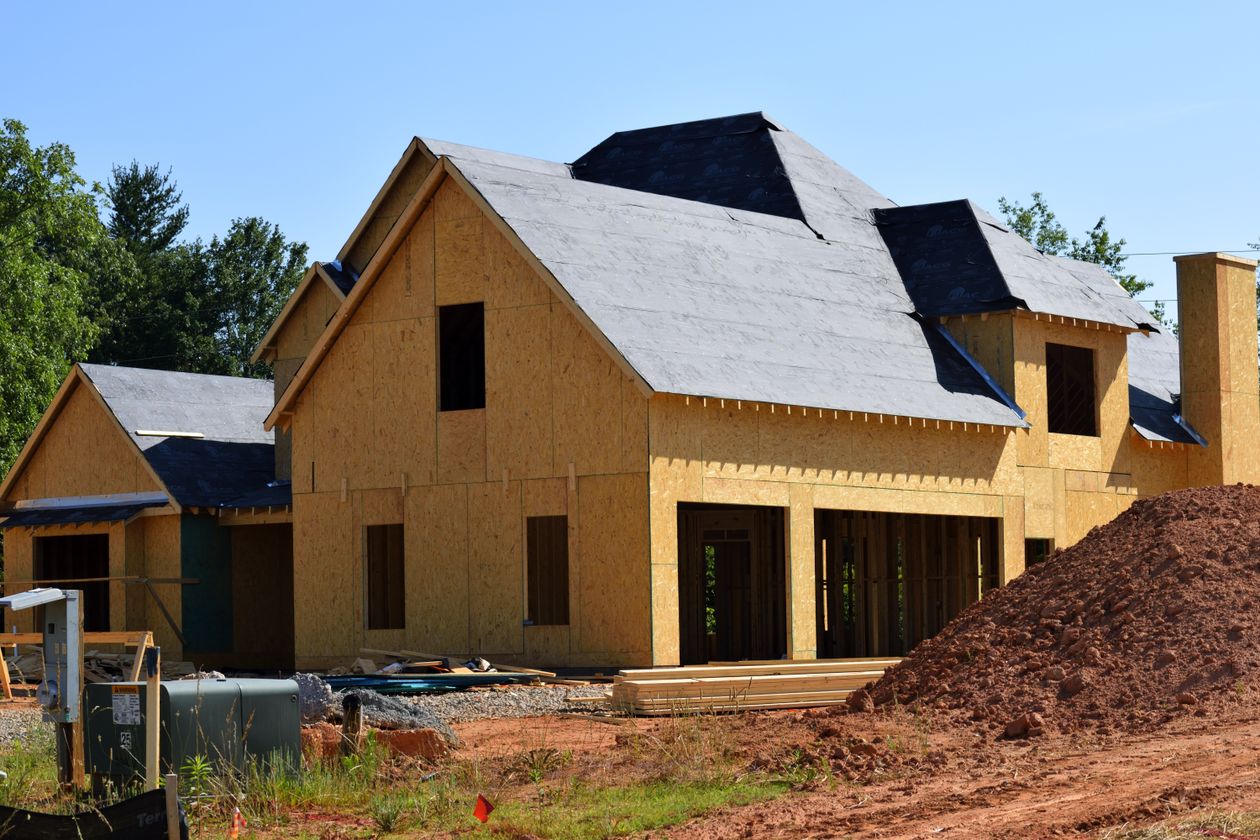
A partially built two-story home in the wood-framing stage. Photo via Pexels.
During your first year in a new Cibolo or Schertz home, the mortgage payment lands right where the builder's lender said it would. Then a letter from your loan servicer shows an escrow shortage in the thousands and a payment that just jumped by several hundred dollars a month. That is the first-year trap with new construction property taxes, and it can catch new-build buyers off guard.
I'm Anthony Sharp, a U.S. Air Force veteran and REALTOR® with Sharp Realty Group, and I have lived in Cibolo for more than six years. I also own and self-manage rental homes in these same ZIP codes, and because I file a property tax protest on my own appraisals most years, I read district notices from the owner's side as well as the agent's.
From my seat on the Cibolo Planning and Zoning Commission, I see new subdivision phases come through as plats long before the first slab is poured, and each of those lots starts out on the tax roll as raw land. That gap between lot value and finished-home value is where the trap lives. The good news is that you can see it coming and plan around it before you ever sign.
How New Construction Property Taxes Work in Texas
Texas has no state property tax. Every bill comes from local taxing units, and each one works off a value your county appraisal district sets once a year. Three pieces of that system explain why a new build's tax history looks so lopsided:
The January 1 Snapshot
Appraisal districts value property as it stood on January 1 of each tax year. A house that was a bare slab, a wood frame, or a half-finished shell on that date is appraised in that condition, so the lot carries most or all of the value. Each district sets its own way of measuring progress, so your account record is the final word.
Scroll through new-build listings in the Multiple Listing Service (MLS) around Cibolo and Schertz, and you may see the tax field marked “Taxes Not Assessed” or filled with a placeholder figure. That is the January 1 snapshot at work, not a sign the home will be cheap to own.
The Lot-Only First Bill
Texas property taxes are billed in arrears. Bills typically go out in October and are due by January 31 of the following year, though exact dates depend on your county tax office. That means the first bill tied to your new home reflects a January 1 value from before you moved in. On many new builds, that means a bill based mostly on the lot. It looks small because it is small, and that small number is the tax record your lender sees at closing.
The Full-Value Second Bill
By the next January 1, the appraisal district sees a finished house with a family living in it. The value can move from lot-only to the full market value of the home in a single year, and the tax bill follows. The 10% homestead cap will not soften that first jump, because under current state law it does not take effect until the year after you first qualify for the homestead exemption. Records vary by district, so check with your appraisal district on how your account is handled.
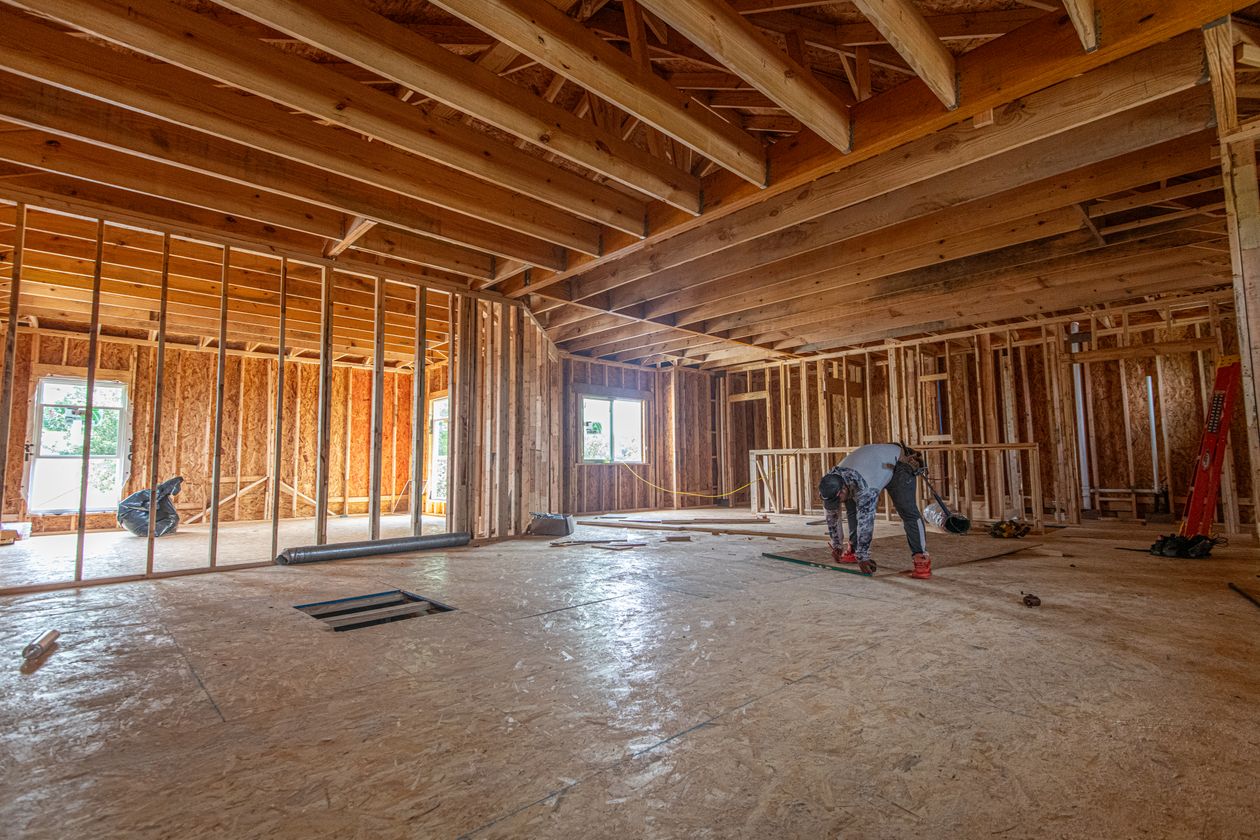
The interior of a home under construction. Photo via Pexels.
Why the First-Year Tax Bill on New Construction Hits Escrow So Hard
Most buyers never write a property tax check. The lender collects a slice of the annual bill with each mortgage payment and pays the county for you, which works smoothly until the bill it planned for and the bill that arrives are thousands of dollars apart. That gap opens in three stages:
How the Escrow Starts
At closing, your lender estimates a year of taxes and insurance and splits it into monthly deposits. Federal escrow rules let the servicer base that estimate on the prior year's tax charge, and on a new build, that charge may reflect only the lot. For a new home that has not been assessed yet, the rules also allow an estimate based on comparable homes nearby, so ask which approach yours used. Methods vary by lender, servicer, and loan program.
How the Shortage Builds
Federal escrow rules let your servicer collect one-twelfth of the expected yearly bills each month, plus a cushion of up to one-sixth of the yearly total, or roughly two months of deposits. Your loan documents or state law can set a smaller cushion, and your initial escrow statement shows the amount your servicer chose. When those deposits are sized to a lot-only bill, the account cannot keep up with a full-value one, but the servicer still pays the county in full. The account then comes up short by the difference, and that shortfall is what triggers the letter.
How the Payment Resets
At the next annual escrow analysis, two things change at once. Your monthly deposit rises to match the full-value bill, and the servicer adds a catch-up amount to recover the shortage. Under federal rules, a shortage equal to one month's deposit or more is spread over at least 12 months when the servicer collects it. A servicer can also leave a shortage in place, so the exact handling depends on your servicer and your annual escrow statement. On an illustrative Cibolo new build, the numbers can play out like this.
| Stage | What Gets Valued on January 1 | Illustrative Annual Tax | Illustrative Monthly Tax Escrow |
|---|---|---|---|
| Tax year 2026, the year you close | Lot only, about $70,000 | About $1,350 | About $113 |
| Tax year 2027, the first full year | Finished home, about $380,000, with homestead | About $5,830 | About $486 |
| Year after the escrow analysis | Same home, plus a shortage of roughly $4,250 repaid over 12 months | About $5,830 | About $840 |
This is an illustration only. It assumes a $70,000 lot value, a $380,000 finished value, the 2025 combined Cibolo rate of $1.9299 per $100 for both years, the $140,000 school homestead exemption in the second year, a starting escrow based on the lot-only bill, no special-district levy, and no insurance. Your appraised value, the rates your taxing units adopt each fall, and your servicer's escrow method will set your real numbers, and any of them can change.
In that example, the tax portion of the payment climbs by roughly $700 a month during the catch-up year, then settles near $486 once the shortage is repaid. That swing is what strains a household budget, and it is the part you can plan for ahead of time.
How to Estimate Cibolo and Schertz New Construction Taxes Before You Sign
The full-value bill is knowable long before closing day. Four pieces get you to a number you can budget around:
The Full Combined Tax Rate
Your bill adds up the rate of every taxing unit that covers the address, quoted per $100 of taxable value. For tax year 2025, the City of Cibolo lists a combined rate of $1.9299 per $100. That includes the city at $0.5226, Guadalupe County at $0.2784, the Schertz-Cibolo-Universal City Independent School District (SCUCISD) at $1.0769, and a lateral road levy at $0.0520. On the Guadalupe County side of Schertz, the same stack with the city's $0.5118 rate comes to about $1.92.
Schertz addresses in Comal County or Bexar County carry different county and school rates, and the Comal Independent School District serves part of the city. Rates are reset each fall and can differ from 2025, so pull the current figures from your county tax office before you lock in an estimate.
The Homestead Exemption Math
Next, subtract your homestead exemption from the school portion of the bill. Texas school districts must exempt $140,000 of a homestead's value. Homeowners who are 65 or older or disabled can receive an additional $60,000 off school taxes, and any taxing unit can adopt a local option exemption of up to 20% of the value. These amounts are set by state law and local taxing units, and they can change with new legislation or local decisions.
Timing matters here. Since 2022, Texas has let new owners claim a homestead exemption for the part of the year after they buy, as long as the prior owner did not receive one that year. A builder that never lived in the home will not have claimed it, so file right after you move in. Before you send in your Texas homestead exemption application, confirm which county appraisal district handles the address, since Schertz alone reaches into Guadalupe, Comal, and Bexar counties. Filing steps and required documents vary by appraisal district.
The Special District Line Items
Many newer subdivisions sit inside a municipal utility district (MUD) or a public improvement district (PID), and either one can add a tax or assessment on top of the city, county, and school rates. Some Schertz new-build listings flag a MUD right in the MLS. Texas law requires the seller to give you a written notice for either type of district, and a MUD notice lists the district's current tax rate. Read it closely and add that rate to your estimate, because the combined city, county, and school rate will not include it. Districts set their rates each year, so the figure can change after you close.
The Lender and Builder Questions
Builder incentives can blur the picture, too. A rate buydown or closing credit can make the starting payment look lean, so when you weigh whether new construction in Schertz beats resale this year, give the escrow line the same scrutiny as those incentives. Before you sign, put these questions to the sales office and the lender, in writing when you can.
- What value and tax rate did you use to set my monthly escrow?
- Can my escrow be based on the finished home's expected value instead of the lot?
- Is the home inside a MUD, PID, or other special district, and what is its current rate?
- What was the home's appraised value on the most recent January 1, and how complete was it on that date?
- How will my payment change after the first escrow analysis?
Answers vary by builder, lender, and loan program, so treat this list as a general guide and confirm each answer in writing.
Looking for a move-in-ready home before your report date at Joint Base San Antonio (JBSA)? Browse our homes for sale near JBSA and compare each one's tax history against a builder's estimate before you decide. Listings change often, so availability may differ by the time you read this.
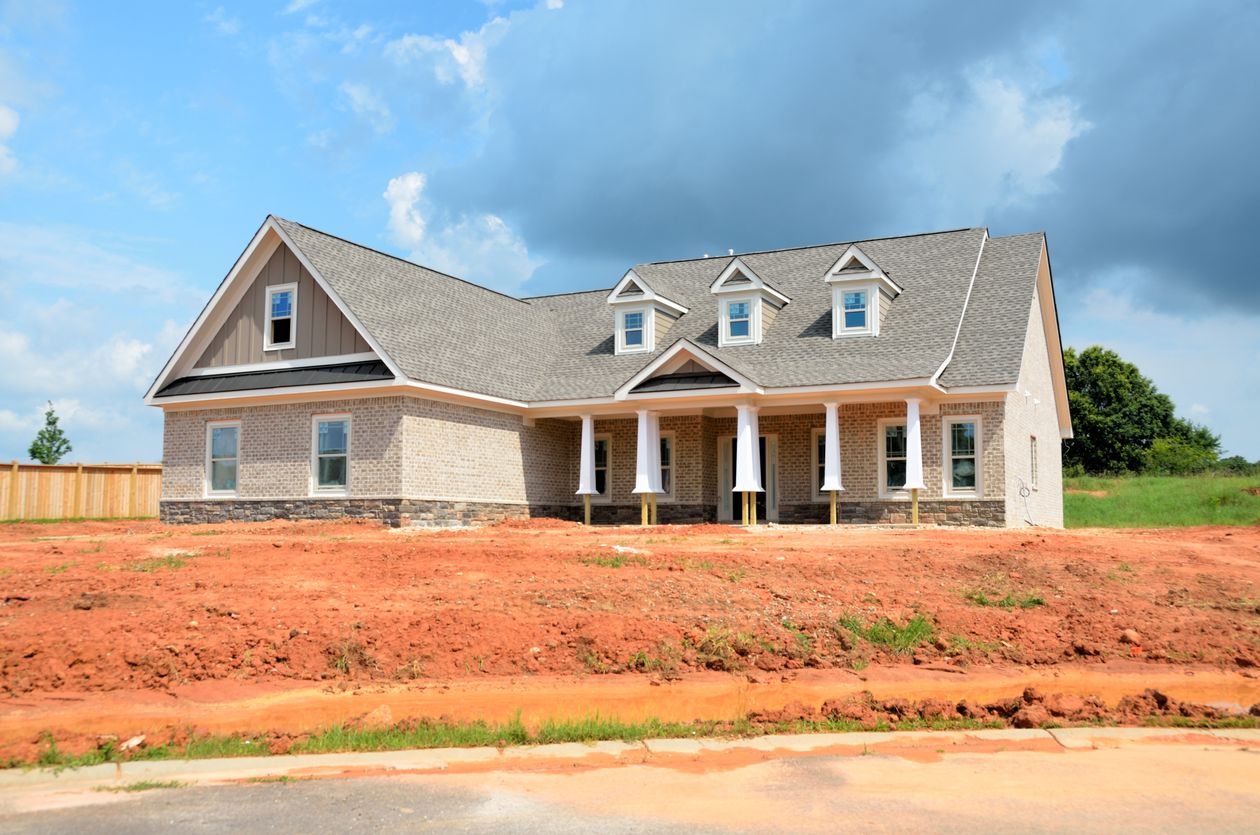
A finished brick home under a cloudy sky. Photo via Pexels.
Protecting Your Payment From the New Construction Tax Jump
Knowing the jump is coming is half the work. The other half is building a cushion so the escrow letter turns into routine paperwork instead of a budget emergency:
Padding Your Escrow From Day One
Ask your lender whether it can base the starting escrow on what the finished home is likely to owe. Federal escrow rules also let you and your servicer agree, after an escrow analysis, to deposit more than the usual limit for the coming year. Whether either option is available depends on your lender's or servicer's policies and your loan program. Either route means a higher payment from the first month, but the payment you start with should stay much closer to the payment you keep.
For military families relocating to JBSA, this matters even more. Your Basic Allowance for Housing (BAH) does not rise when your escrow does, so measure your allowance against the full-value payment from the start, not the first-year payment. BAH rates are reset each year, so confirm your current rate before you set a budget.
Banking the Difference Yourself
Where your lender sticks with the lot-only figure, build the cushion yourself. Set up an automatic monthly transfer into a separate savings account equal to the gap between the escrow you pay and the full-value estimate, which comes to roughly $370 a month in the Cibolo example. Your own gap will depend on your lender's escrow method and your actual tax bill. When the shortage notice arrives, that account can carry the higher payments while your budget stays steady.
Protesting the First Full Value
The first full appraisal on a new build is worth checking line by line. Compare the district's value to your purchase price and to recent sales of similar homes, and confirm the square footage and features match what was built. The protest deadline is generally May 15 or 30 days after the district mails your notice, whichever is later.
Protests built on comparable sales and closing paperwork tend to hold up better than ones built on how high the bill feels. Procedures vary by appraisal district and review board, so confirm the dates printed on your notice.
Underwriting a Rental at the Full Rate
Investors buying a new build to rent out face a steeper version of the same jump. A rental is not your homestead, so the $140,000 school exemption does not apply, and the second-year bill lands at the full combined rate. In the Cibolo example, that same $380,000 home would carry a bill of about $7,330 a year as a rental instead of about $5,830 as a homestead.
Run rental numbers at the full combined rate on the finished value with no exemptions, because a builder's estimate or a lot-only record can make cash flow look better than it will be. The same caution applies to a military family that buys with a homestead and rents the home out after a permanent change of station, since the exemption generally ends once the home is no longer your principal residence. Check the timing with the appraisal district and a tax professional.
Claiming the Exemptions You Have Earned
Of all the Texas property tax exemptions, the ones for disabled veterans can move your bill the most. A veteran who receives 100% disability compensation from the U.S. Department of Veterans Affairs (VA) for a service-connected disability, with a rating of 100% or of individual unemployability, can have the full value of a homestead exempted. Lower ratings carry partial exemptions of $5,000 to $12,000 of value. Homeowners 65 or older and those with a disability have their own exemptions and a school tax ceiling. Exemptions generally require an application, so file as soon as you qualify and ask your lender to adjust escrow once the exemption posts. Eligibility rules and amounts are set by state law and can change, so confirm the details with your appraisal district.
Buying New Construction in Cibolo and Schertz With Confidence
The escrow letter that blindsides new-build owners does not have to surprise you. The first bill reflects the lot, the second reflects the house, and a rate sheet plus a few direct questions will show you the difference before you sign. That turns new construction property taxes from a trap into one more line in a budget you control. As a military REALTOR® in Cibolo, I am glad to walk you through that math on any home you are considering.
A new home here can still be a smart move, with a builder warranty, modern systems, and a short drive to the Randolph gate. Go in with the full-value number already in your plan, keep a cushion for the first reset, and the home you chose on the model tour stays affordable long after the paint dries.
Ready to See Your Real Tax Number?
I'm Anthony Sharp with Sharp Realty Group, and I help buyers and military families across Cibolo, Schertz, and the JBSA corridor. Send me the address or the builder's tax estimate, and I will help you check it against the full finished-home bill before you commit.
A resale home sidesteps the first-year jump because its tax record already reflects a finished house.
Call or text: 210-997-0763
Schedule a time: book a consultation
Email: anthony@sharprealtygrouptx.com
Office: 213 Terramar, Cibolo, TX 78108
Frequently Asked Questions (FAQs)
Why are property taxes so low the first year on a new build in Texas?
Appraisal districts value property as it stood on January 1. A home that was unfinished or not yet started on that date is often appraised at little more than the lot, so the first bill is small.
The next year picks up the finished home at full value, and the bill rises to match. Valuation practices vary by appraisal district, and yours can show you what was on the roll for your account.
How much do taxes go up after the first year on new construction?
It depends on the lot value, the finished value, and your local rates. With 2025 combined rates of about $1.92 to $1.93 per $100 in Cibolo and Schertz, a home appraised near $380,000 with a homestead exemption could owe about $5,830 a year, compared with about $1,350 on a lot-only bill.
Treat those as illustrative figures and run your own estimate with the current rates for your address.
Can I file a homestead exemption the same year I buy a new home in Texas?
Generally, yes. As long as the previous owner did not claim it for that year, you can claim a prorated homestead exemption from the date you own and occupy the home.
File Form 50-114 with your county appraisal district as soon as you move in. Filing rules vary by district, so confirm what yours requires.
Does the 10% homestead cap protect a new build from the tax jump?
Not the first jump. Under current state law, the cap does not take effect until the year after you first qualify for the homestead exemption.
Once it applies, it limits how fast your appraised value can rise from one year to the next, which helps after the finished home is on the roll.
Can I protest the first full appraisal on my new construction home?
Yes. Every Texas property owner can protest an appraised value, and the first full value on a new build deserves a close look. The deadline is generally May 15 or 30 days after the district mails your notice, whichever is later. Bring comparable sales and your closing paperwork, and confirm the exact deadline printed on your notice.
A local agent can pull comparable sales for you, and I am happy to help you review your notice when it arrives.
Do disabled veterans pay property taxes on new construction in Texas?
A veteran who receives 100% VA disability compensation for a service-connected disability, with a rating of 100% or of individual unemployability, can qualify for a total exemption on a homestead, newly built or not. Lower ratings carry partial exemptions of $5,000 to $12,000 of value.
Apply soon after closing, then ask your lender to adjust escrow once the exemption posts. Eligibility rules can change, so confirm the requirements with your appraisal district. As a fellow veteran, I can help you sort out which exemptions to ask your appraisal district about.
* * *
Disclaimer: This article is general information only and does not consider your individual financial, tax, or legal circumstances. Property tax rates, exemptions, appraisal practices, escrow rules, and listing details change and are provided as a general guide, not a guarantee. Nothing here guarantees financing, approval, appreciation, or resale value. Before making a decision, speak with a qualified professional such as a REALTOR®, a licensed lender, a tax professional, or an attorney about your specific situation.
Categories
- All Blogs (281)
- BAH (4)
- For Home Buyers (196)
- For Home Sellers (92)
- For Investors (44)
- For Military Service Members (186)
- For Renters (10)
- JBSA (7)
- Local Events (12)
- Local Real Estate News (40)
- Market Updates (43)
- Military Relocation (42)
- Neighborhood Tours (58)
- PCS Move (109)
- Property Tours (7)
- VA Loans (15)
Recent Posts