
San Antonio Housing Market Update: September 2026
San Antonio Housing Market Update: September 2026
Key Takeaways
- The San Antonio housing market recorded 2,793 sales in September 2026, about 1% fewer than a year earlier, while the median price eased roughly 2% to $302,999.
- With homes spending an average of 88 days on the market and 5.95 months of inventory, buyers have more choice and more room to negotiate.
- Mortgage rates rose for seven straight weeks to 7.40%, so seller credits, rate buydowns, and assumable loans deserve a closer look.
- Sellers who price to the latest comparable sales and plan for a longer timeline stand a better chance of reaching the buyers still shopping.

A home for sale with a spacious front lawn. Photo: Pexels.
You got preapproved this summer at a rate in the mid-6% range, and by the time you found the right house in late September, the same loan cost noticeably more each month. Sellers are feeling the other side of that squeeze, with fewer showings and listings sitting longer than planned. This San Antonio housing market update for September 2026 looks at what changed, why it changed, and what it could mean for your next move.
I am Anthony Sharp, a U.S. Air Force veteran and REALTOR® with Sharp Realty Group in Cibolo, and I follow the San Antonio Board of REALTORS® (SABOR) monthly reports for buyers and sellers across San Antonio, Schertz, Cibolo, and the communities around Joint Base San Antonio (JBSA). Before you tour or compete with any of today's San Antonio homes for sale, it helps to know what the September numbers show, because they explain much of what is happening at showings.
Prices held close to last year, inventory stayed deep, homes took longer to sell, and mortgage rates pushed past 7% late in the month. Each of those shifts plays out differently depending on whether you are buying, selling, relocating on military orders, or holding rental property.
September 2026 San Antonio Housing Market by the Numbers
SABOR's September report, dated October 9, 2026, covers home sales across its multiple listing service (MLS) area. Compared with September 2025, the headline numbers looked like this:
| Metric | September 2026 | Change From September 2025 |
|---|---|---|
| Closed sales | 2,793 | Down about 1% |
| Median price | $302,999 | Down about 2% |
| Average price | $363,341 | Down about 2% |
| Average days on market | 88 | Up 11% |
| Months of inventory | 5.95 | Up slightly from 5.9 |
| Active listings | 17,155 | Up 4% |
| New listings | 4,172 | Up 3% |
| Pending sales | 2,091 | Down 16% |
These figures cover the full SABOR MLS area, and individual neighborhoods can run well above or below them. The September 2025 inventory figure comes from KSAT's coverage of SABOR's report that month. SABOR may revise its numbers, so treat the table as a general guide.
Closed Sales
SABOR counted 2,793 closed sales in September, about 1% fewer than the 2,823 a year earlier and still more than the 2,693 in September 2024. The dip is mild, and it comes after an August when area sales rose about 4% year over year, according to Texas Public Radio's coverage of SABOR's August report.
Many September closings likely went under contract in July or August, while the average 30-year rate was still in the mid-6% range, so the late-September rate jump shows up more clearly in contract activity.
Median and Average Prices
The median price came in at $302,999, down about 2% from $308,995 in September 2025, and the average price fell about 2% to $363,341. Over the last three Septembers, the median has eased from $312,000 in 2024, a gradual slide rather than a sharp drop.
SABOR leans on the median for a read on the typical home, because a few high-priced sales can skew the average. On a home near the median, a 2% change works out to roughly $6,000, enough to matter at the negotiating table. The September median was also a bit higher than August's, which sat just above $299,000. Prices in your neighborhood may move differently from these area-wide figures.
Days on Market
The average home spent 88 days on the market in September, 11% longer than a year earlier. Homes closed, on average, at 92.4% of their original list price, a figure that mixes homes priced right from day one with homes that went through one or more reductions.
As an illustration only, a $300,000 listing that followed that average would close near $277,200. Part of that gap is ordinary negotiation, and part of it is the cost of starting too high when buyers can afford to wait.
Inventory and Listings
Inventory reached 5.95 months, meaning the current supply would take nearly six months to sell at September's pace if no new listings came on. That gives buyers more homes to compare and more time to decide, though the picture varies by price range and neighborhood.
The number of active listings grew 4% to 17,155, and new listings were up 3% at 4,172. With more homes coming on and fewer going under contract, market times tend to stretch.
Pending Sales
Pending sales, meaning homes under contract that had not yet closed, fell 16% year over year to 2,091. Since many of those contracts turn into the next month's closings, pending sales work as an early signal for the months ahead.
A drop of that size, landing in the same weeks rates climbed fastest, could point to softer closing totals in the next report or two. Cancellations and seasonal patterns also play a part, so one month does not set a trend.
Bexar County and Texas Comparisons
In Bexar County, single-family sales rose 6% to 1,839. Prices moved the other way, with the median down 4.8% at $282,680 and the average down 3.8% at $333,434. Bexar County inventory measured 5.4 months, a little tighter than the wider SABOR area.
Statewide, Texas recorded 25,584 sales in September, a 4.4% decline from a year earlier, while the median slipped 0.7% to $330,000. That leaves the San Antonio-area median about $27,000 below the Texas figure, though any single neighborhood can look quite different.
How Mortgage Rates Above 7% Are Reshaping the San Antonio Market
Prices explain only part of September. The bigger shift came in financing, and it caught many buyers in the middle of their home searches:
The 7-Week Rate Climb
According to Freddie Mac's weekly Primary Mortgage Market Survey, the average 30-year fixed rate was 6.71% on September 3, 2026. It crossed 7% on September 24 at 7.03%, its first reading above that mark since early 2025, then climbed to 7.28% on October 1 and 7.40% on October 8. That was seven weekly increases in a row, and a year earlier the same average sat at 6.30%.
Mortgage rates generally move with the 10-year Treasury yield, and that yield also climbed during those weeks, according to Realtor.com analysis cited by Fox Business. Freddie Mac's survey is based on conventional purchase loans with 20% down and strong credit, so your own quote could come in higher or lower depending on your loan program, credit, and lender. Rates change every week, and each lender sets its own pricing.
The Monthly Payment Math
As an illustration only, the principal and interest payment on a $300,000 loan comes to about $1,928 a month at 6.66%, the late-August average, and about $2,077 at 7.40%. That is roughly $149 more each month, or close to $1,800 a year, before property taxes, homeowners insurance, or homeowners association (HOA) dues.
For a buyer with a firm monthly ceiling, that difference alone can shrink the loan they can comfortably carry by more than $20,000. A preapproval from a few months ago may no longer reflect today's payment, so it is worth asking your lender for an updated estimate whenever rates move. Your actual payment depends on your lender's terms, loan program, and final rate.
The Buydown and Assumption Options
A permanent buydown lowers the rate for the life of the loan in exchange for an upfront cost. A temporary 2-1 buydown cuts the rate for the first two years, and then the payment rises to the loan's full rate. When the loan program allows it, a seller credit can pay for either one.
Some homes also carry an existing loan backed by the U.S. Department of Veterans Affairs (VA) or the Federal Housing Administration (FHA) at a lower rate than today's, and a qualified buyer may be able to take it over with the loan servicer's approval. A buyer weighing a VA loan assumption needs to know who qualifies, how the seller's entitlement is handled, and how the seller's equity gets paid, since each loan servicer sets its own process.
These questions can help you sort out which strategy fits your budget before you lock a rate.
- What is my rate and payment today, and how long will the lock hold?
- What would a permanent buydown cost, and how many years until the savings cover it?
- How would a temporary 2-1 buydown change my payments in years one and two?
- Can a seller credit pay for the buydown under my loan program?
- What happens to my lock if closing slips because of a repair or appraisal issue?
Buydown pricing, lock periods, and assumption rules vary by lender, servicer, and loan program, so treat these questions as a general guide and confirm the details with a licensed lender.
What the San Antonio Housing Market Means for Buyers This Fall

Weighing the numbers before buying. Photo: Pexels.
Higher rates grab the headlines, but deep inventory and longer market times give buyers real leverage, and there are several ways to use it:
Negotiating From a Stronger Position
With homes sitting longer and closing below their original asking price, many sellers are more open to terms than they were earlier in the year. Not every seller will discount, and well-priced homes in high-demand school zones can still draw quick offers. Still, a fair, well-supported offer often opens a real conversation.
Depending on the home and the seller, a buyer might ask for one or more of these terms.
- A seller credit toward closing costs or prepaid items
- A seller-funded rate buydown, permanent or temporary
- Repairs or a repair credit after the inspection
- A one-year home warranty paid by the seller
- A closing date that matches your lease end or report date
- A price adjustment when the home has sat well past the area average
What a seller agrees to depends on the market for that specific home and the limits of your loan program, so treat this list as a general guide.
Asking for Credits Before Price Cuts
A price reduction trims the loan amount a little, while a credit of the same size aimed at a rate buydown can lower the monthly payment more in the early years, depending on how the lender prices the buydown and how long you keep the loan. Running both scenarios with your lender before you write the offer shows which one helps more.
Loan programs cap what a seller can contribute. On a VA loan, for example, VA guidelines generally cap seller concessions at 4% of the home's reasonable value from the VA appraisal, while ordinary closing costs fall outside that limit. Caps and lender rules can change, so confirm the numbers for your loan before you negotiate.
Targeting Homes With Longer Market Times
A listing that has sat for 60 or 90 days may belong to a seller who has watched buyers walk past and is ready to talk, which can mean more room on price and terms than a home that went live last week. A long market time still doesn't promise a discount.
Time on market is a clue, not a verdict. A careful inspection and a look at the price history help you tell whether a home sat because of price, condition, or weak presentation.
Budgeting the Full Monthly Payment
Principal and interest are only part of the payment. Texas has no personal income tax, which puts more weight on local property taxes, and those taxes plus insurance and HOA dues can add meaningfully to each payment. According to the Texas Comptroller, cities, counties, school districts, and special-purpose districts can all tax the same property, so two homes at the same price can carry different tax bills. Each taxing unit sets its own rate, and rates can change yearly.
Owning and self-managing rental homes in this corridor has shown me how much taxes and insurance can move a monthly payment. A tax professional or your county appraisal district can explain which exemptions apply to your property.
A seller credit is one way to soften a 7% rate. Buyers who make an acceptable offer on 672 Planters Pass in Schertz, a four-bedroom Kramer Farm home off Schertz Parkway listed at $375,000, receive an $8,000 seller credit that they may put toward closing costs or a rate buydown within their lender's guidelines. Credit terms and listing details can change, so confirm the current offer on the listing page.
What the San Antonio Housing Market Means for Sellers This Fall
A for sale sign in a suburban yard. Photo: Pexels.
The same conditions that give buyers leverage ask more patience of sellers. Buyers are still closing on homes every week, but they are moving more slowly and comparing more homes before they commit, and that shapes a few decisions:
Pricing to the Latest Comparable Sales
A list price built on spring sales may already be out of step with buyers shopping at 7% rates. The comparable sales that matter now usually closed within the last 90 days, sit in your subdivision or a nearby one, and match your home in size, age, and condition. Active and pending listings then show who you are competing with today. Comp selection can vary by agent and appraiser.
When you are pricing a San Antonio home this fall, starting close to market value protects the early attention a new listing tends to get.
Planning for a Longer Timeline
An 88-day average means carrying costs deserve a line in your budget. Each extra month adds another mortgage payment, insurance premium, utility bill, and round of yard care, and all of it comes out of your proceeds.
Sellers who also need to buy can plan for the gap with a sale contingency, a leaseback, or short-term housing, depending on their finances and what each party will accept. These terms are negotiated case by case and may need lender approval.
Weighing Concessions Against Price Cuts
With rates above 7%, many buyers shop by monthly payment rather than list price, so a credit toward their rate buydown may draw more interest than a price cut of the same size. A price cut has its own advantage, since it can put your home in front of buyers searching a lower price range and trigger price-drop alerts on home search apps. Either way, the buyer's loan program limits how much you can contribute.
Competing With New Construction
Resale sellers in the northeast corridor are not only competing with each other. SABOR's June 2026 report noted that builders were staying competitive with incentives and pricing strategies, and packages such as rate buydowns or closing-cost help can make a new home's payment look competitive with an older one. Incentives vary by builder and change often. I serve on the Cibolo Planning and Zoning Commission, and the area's steady growth is part of the backdrop every resale listing faces.
Resale homes can still hold real advantages, such as established lots, mature trees, and sometimes more square footage for the price. Presenting those strengths clearly helps a resale home hold its own next to a model home.
Pricing against the neighborhood record is how one Fairway Ridge listing is positioned right now. The asking price on 3113 Cameron Riv in Schertz, a five-bedroom, three-bath home with 3,526 square feet, is $429,900, which the listing notes is below both five-bedroom sales in the subdivision over the past 12 months. Listing details and pricing can change, so confirm current information on the listing page.
How the San Antonio Market Looks for JBSA Military Families and Investors

Unloading boxes on move-in day. Photo: Pexels.
Military moves and rental decisions run on their own clocks, so the September figures land a little differently here:
Military Buyers Facing Report Dates
A permanent change of station (PCS) move squeezes the buying decision into a few weeks, and a deeper market works in your favor. With more homes for sale, one house-hunting trip is more likely to turn up several solid options near your gate, whether that is JBSA-Randolph, JBSA-Fort Sam Houston, or JBSA-Lackland.
A VA loan with full entitlement allows zero down, but its rate still follows the broader market, and the amount you can borrow comes down to your lender's approval. Your Basic Allowance for Housing (BAH) is based on local rental data rather than homeownership costs, according to the Department of Defense, so it does not rise when mortgage rates do.
BAH is set by your duty station's military housing area, pay grade, and dependency status, and the JBSA installations generally fall within the same San Antonio housing area. Running those details through the Defense Travel Management Office's official BAH rate lookup before you set a budget gives you the exact figure to plan around. BAH rates and eligibility rules can change each year, so confirm your numbers with your finance office and a VA lender.
Military Sellers Leaving JBSA
Sellers heading to a new duty station have less time to wait out a slow market. Counting back from your report date gives you a listing date and price review points that leave the sale room to breathe. A price set close to market value on day one also helps you avoid cutting the price later while you are already at your next duty station.
A low-rate VA loan can be a selling point in a 7% market, since a qualified buyer may be able to assume it with the servicer's approval. The catch, as VA's own assumption guidance explains, is that your entitlement remains attached to the loan unless the person assuming it is an eligible veteran who completes a substitution of entitlement. Once you have reported, a remote closing through a power of attorney can keep the sale moving, depending on the title company and lender.
Investors Weighing Rental Demand
SABOR reported an average residential rent of $1,831 in September, with 5,067 active rental listings across its area. At 7.40%, the math on a rental is tighter than it was a year ago, and a property that penciled out at 6.30% may not work today.
Since I self-manage rental homes across the Cibolo-Schertz corridor and protest my own property appraisals most years, I know which items to check before any rental purchase.
- Rent comparables for the exact subdivision, not the metro average
- A vacancy cushion, such as one month of rent each year
- Property taxes at the full rate, without a homestead exemption
- Insurance quotes for a landlord policy rather than an owner policy
- HOA rules on leasing and minimum lease terms
- A maintenance reserve for the roof, heating and cooling system, and water heater
Rental returns depend on the property, financing, and local rules, so treat this list as a general guide and check with a tax professional before counting on any particular result.
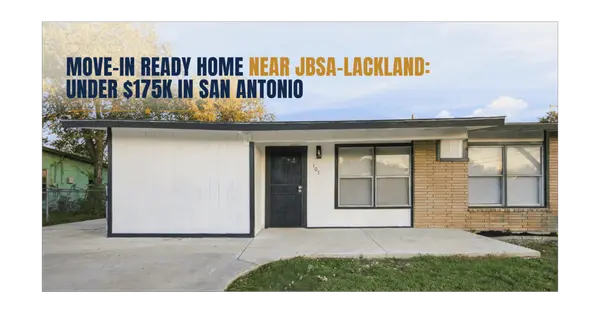
Buyers touring entry-priced homes near JBSA-Lackland will find 103 Chadwick Dr, a three-bedroom, one-bath 1963 ranch in Valley Hi listed at $172,000. Like both Schertz homes above, it accepts VA financing. Listing details can change, so confirm current information on the listing page.
Moving Forward in the San Antonio Market With Confidence
The rate quote that stung in September is one number, not the whole market. For buyers, the way forward is a plan built around the full monthly payment and the right concessions. For sellers, it is a price and timeline that fit the buyers still shopping.
Service members on orders face a tighter clock than most, and working with a military relocation specialist who tracks these numbers every month helps line up your price, financing, and report date.
Markets like this one reward people who move with clear numbers rather than headlines. Whether you are buying near Randolph, selling before a PCS, or adding a rental, you can make a confident decision this fall with the right information in hand.
Ready to Talk Through Your Next Move in San Antonio?
I am Anthony Sharp with Sharp Realty Group, a U.S. Air Force veteran who helps buyers, sellers, investors, and military families across San Antonio, Schertz, Cibolo, and the JBSA corridor make sense of the monthly market data. For a look at how September's numbers apply to your home, budget, or orders, let's talk.
Call or text: 210-997-0763
Schedule a time: book a consultation
Email: anthony@sharprealtygrouptx.com
Office: 213 Terramar, Cibolo, TX 78108
Frequently Asked Questions (FAQs)
Is the San Antonio housing market crashing in 2026?
The September 2026 SABOR data does not point to a crash. Sales slipped about 1% from a year earlier, and the median price eased roughly 2% to $302,999, a gradual cooling rather than a sharp drop.
What has changed is the pace. Homes are taking longer to sell, and higher rates are slowing new contracts, so conditions could keep softening, though nobody can predict prices with certainty.
Is San Antonio a buyer's market right now?
With 5.95 months of inventory, an average of 88 days on the market, and homes closing at about 92% of their original list price, September's numbers tilt toward buyers in many price ranges.
Well-priced homes in high-demand school zones can still sell quickly, so your negotiating room depends on the specific home, its price range, and how long it has been listed.
Should I wait for mortgage rates to drop before buying in San Antonio?
Nobody can say when rates will fall. Waiting may bring a lower rate, but it could also bring more competition and less negotiating room if rates ease and buyers return at once.
Some buyers move ahead now, negotiate a credit or buydown, and consider refinancing later, though that depends on where rates go, your finances, and the closing costs of a new loan. A licensed lender can run both scenarios against your budget and timeline.
What is the median home price in San Antonio?
SABOR reported a median price of $302,999 for September 2026 across its MLS area, down about 2% from a year earlier.
Medians move every month, so treat any single figure as a snapshot.
How long does it take to sell a house in San Antonio right now?
Homes stayed on the market an average of 88 days in September 2026, 11% longer than a year earlier. Closing adds more time after you accept an offer, and that timeline depends on your loan type, lender, appraisal, and contract terms.
Pricing and condition largely decide where your home lands against that average, though every listing moves at its own pace. Building your timeline backward from your move date lets price checkpoints come early rather than late.
How do higher mortgage rates affect military buyers using a VA loan near JBSA?
VA loan rates generally move with the broader market, so the late-September climb affects VA buyers too. Zero down with full entitlement still keeps upfront costs low, and seller concessions or a seller-funded buydown can ease the monthly payment within VA limits. VA rules and lender requirements can change, so confirm the details with a VA-approved lender.
Your BAH does not change with mortgage rates, so compare the full payment, including taxes and insurance, against your allowance before you shop. Sharp Realty Group works with VA-savvy lenders around JBSA who can price your options to fit your report date.
* * *
Disclaimer: This article is general information only and does not consider your individual financial, tax, or legal circumstances. Market data, mortgage rates, loan program terms, and listing details change and are provided as a general guide, not a guarantee. Nothing here guarantees financing, approval, appreciation, or resale value. Before making a decision, speak with a qualified professional such as a REALTOR®, a licensed lender, a tax professional, or an attorney about your specific situation.
Categories
- All Blogs (274)
- BAH (3)
- For Home Buyers (191)
- For Home Sellers (91)
- For Investors (42)
- For Military Service Members (183)
- For Renters (9)
- JBSA (6)
- Local Events (12)
- Local Real Estate News (40)
- Market Updates (42)
- Military Relocation (41)
- Neighborhood Tours (58)
- PCS Move (108)
- Property Tours (6)
- VA Loans (14)
Recent Posts