What Are Buyer Closing Costs in San Antonio? (2026)
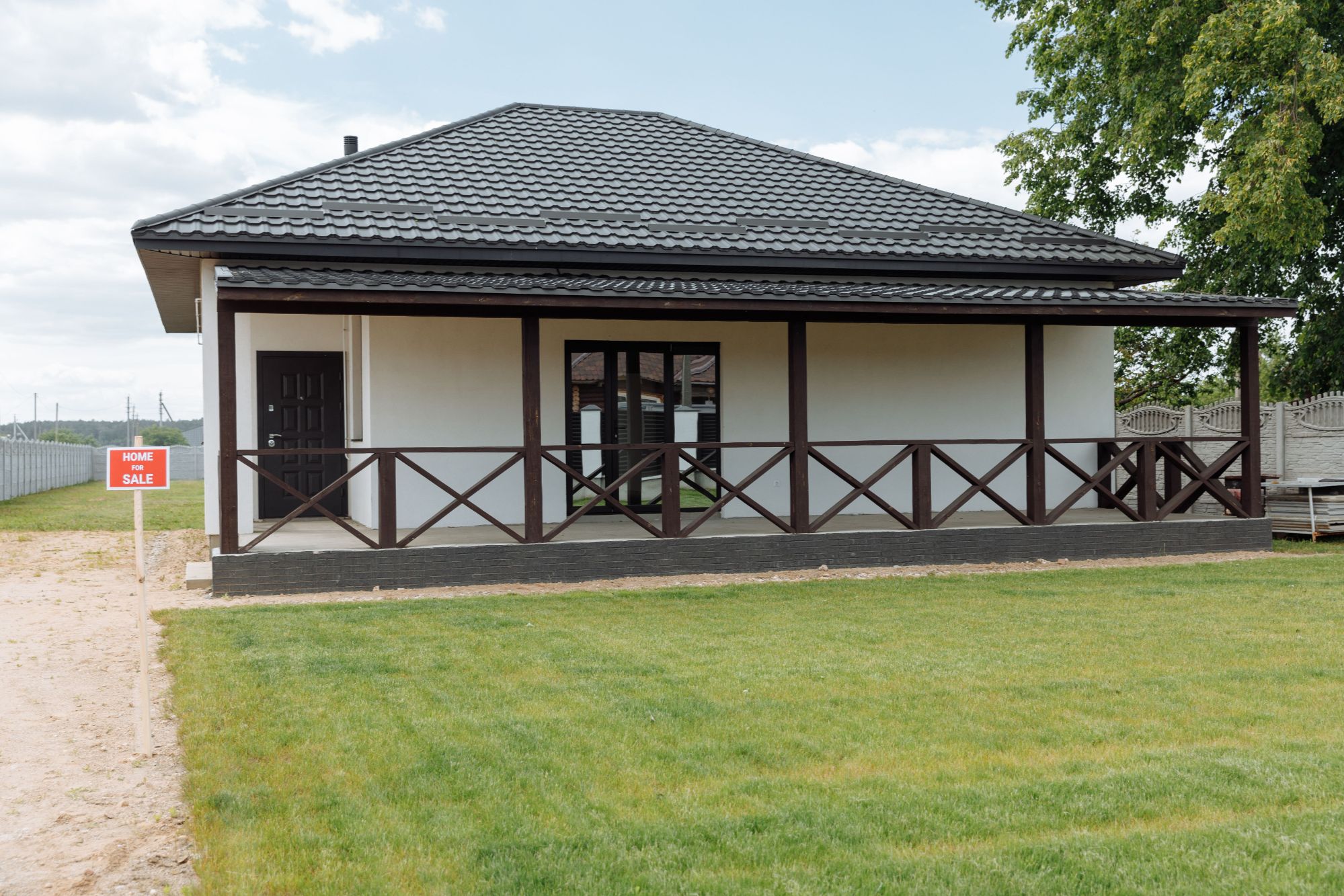
A for sale sign stands on the front lawn of a single-family home. Photo: Pexels.
Your lender's Loan Estimate finally lands in your inbox, you scroll to the line marked Estimated Cash to Close, and the figure sits thousands of dollars above the down payment you spent two years saving. Now you are wondering what buyer closing costs in San Antonio cover, who decided you owe them, and how much of that total you can still negotiate before you sign.
I am Anthony Sharp, a U.S. Air Force veteran and REALTOR® with Sharp Realty Group in Cibolo, and I walk buyers through this exact moment across Schertz, Converse, Universal City, and the wider San Antonio area. Before first-time home buyers in San Antonio sign anything, it helps to know which closing costs the state sets and which ones are still open to negotiation.
Whether you are a first-time buyer, a service member reporting to Joint Base San Antonio (JBSA), or an investor adding a rental, the math follows the same pattern. Every dollar on that estimate has a name, a reason, and often someone else who can help pay it.
Key Takeaways
- Freddie Mac puts typical closing costs at about 2% to 5% of the purchase price, separate from the down payment and before any seller credits.
- Under the standard Texas resale contract, buyers cover lender charges, prepaid items, and half the escrow fee, while who pays for the owner's title policy is negotiated.
- VA, FHA, and conventional loans each set their own limits on seller help, so your loan program shapes how much you can negotiate.
- Seller concessions, competing Loan Estimates, and a careful read of your Closing Disclosure are where buyers usually trim the final number.
How Buyer Closing Costs in San Antonio Add Up in 2026

The Tower of the Americas rises over downtown San Antonio at sunset. Photo: Pexels.
Closing costs follow the same basic structure whether you buy near downtown San Antonio or out in the suburbs, so it helps to see that structure before you study individual fees:
Typical Cost Range for Texas Buyers
Freddie Mac's homebuyer guidance puts typical closing costs at about 2% to 5% of the purchase price, not counting the down payment. Where you land in that range depends on your loan type, your lender's pricing, whether you buy discount points, and how many months of taxes and insurance your lender collects up front.
To put that in local terms, the San Antonio Board of REALTORS® (SABOR) reported a median sale price of about $299,000 for August 2026. At that price, a 2% to 5% range works out to roughly $6,000 to $15,000. On a $350,000 home in Schertz or Cibolo, the same range runs about $7,000 to $17,500. Those are planning numbers, not quotes. Your Loan Estimate gives you the real figure. Lender fees, title charges, and local costs shift over time, so your own total may land outside this range.
Difference Between Closing Costs and Cash to Close
Buyers often treat these two phrases as the same thing, and that is where budgets go sideways. Closing costs are the fees and prepaid items tied to the transaction. Cash to close is the total you bring to the title company, which adds your down payment to your closing costs, then subtracts your earnest money, any option fee your contract credits back, and any seller or lender credits.
As you add up your cash to close, factor in how earnest money in Texas is handled, since that deposit counts toward the total rather than stacking on top of it. Buyers who forget that credit tend to overestimate what they need, while buyers who forget prepaid escrow tend to underestimate it.
Market Conditions Behind 2026 Closings
The San Antonio market this fall gives buyers more room to talk about costs than they had a few years ago. In SABOR's August 2026 report, sales were up about 4% from a year earlier, inventory sat at roughly six months, and listings stayed on the market about 82 days on average. A seller whose home has been sitting may be more willing to cover part of your closing costs than to cut the list price. Market figures move month to month, so check SABOR's latest report before leaning on these numbers.
Rates cut the other way. The Freddie Mac 30-year fixed average was 7.28% as of October 1, 2026, up from 7.03% the week before. Higher rates also raise the prepaid interest you owe at closing, so compare lender pricing carefully rather than assume every quote looks alike. Rates change weekly, and your own quote depends on the lender and your credit profile.
Common Closing Costs Buyers Pay in San Antonio

A homebuyer reviews closing paperwork before signing. Photo: Pexels.
Texas custom decides a lot about which side of the table pays for what, and the standard Texas Real Estate Commission (TREC) resale contract typically splits the most common charges this way:
| Cost Item | What It Covers | Who Usually Pays in Texas |
|---|---|---|
| Origination charges and points | Lender fees to process the loan, plus optional rate buydowns | Buyer |
| Appraisal and credit report | Lender-required valuation and credit check | Buyer |
| Owner's title policy | Coverage for your ownership against covered title defects | Negotiated, often the seller |
| Lender's title policy | Coverage for the lender's lien on the home | Buyer |
| Escrow fee | Title company's charge to manage the closing | Split between buyer and seller |
| Survey | Boundary and improvement survey when one is required | Set by the contract |
| Prepaid taxes and insurance | First-year insurance premium and escrow reserves | Buyer |
| Recording fees | County filing of the deed and loan documents | Buyer, for loan documents |
Contract terms and fees vary by transaction, so treat this split as a general guide and confirm it against your own contract and Loan Estimate.
Lender Costs
Your lender's own charges appear in Section A of the Loan Estimate, including any origination fee and any discount points you choose to buy. Section B lists required services the lender selects, such as the appraisal and credit report. Each discount point typically equals 1% of the loan amount, so one point on a $300,000 loan costs about $3,000 in exchange for a lower rate. How much a point lowers your rate varies by lender and can shift with the market.
Whether that trade pays off depends on how long you keep the loan. A buyer who expects to sell or refinance within a few years may never recover the upfront cost, so ask a licensed lender to run the break-even math before you agree to points.
Title Company Costs
In Texas, the state sets title insurance premiums. The Texas Department of Insurance (TDI) fixes the basic rate every title company must charge for the same policy, and it cut those basic premiums by 6.2% effective March 1, 2026. Under the 2026 schedule, the basic owner's policy premium on a $350,000 home works out to about $2,015.
The TREC contract has a box for whether the seller or the buyer pays for that owner's policy, and on resale homes the seller often covers it. You pay for the lender's policy, which costs $100 under TDI rules when it is issued alongside the owner's policy, plus any endorsements your lender requires. The contract also spells out whether the survey exception on the owner's policy will be amended and who pays for that change. The escrow fee is split between buyer and seller under the TREC contract, and unlike the premium, it can vary from one title company to the next. TDI can revise these rates and rules through future orders, so confirm the current figures with your title company.
Third-Party Costs
A home inspection is often paid directly to the inspector, so it may never appear on your final statement even though it comes out of your pocket. The option fee, which buys your right to back out during the option period, goes to the title company within three days of the contract's effective date. Under the current TREC contract, it counts toward the sales price at closing, though you lose it if you terminate during the option period.
On the survey, the TREC contract lets the seller provide an existing one with a signed T-47 affidavit or T-47.1 declaration, and when the title company and lender accept it, you may avoid paying for a new one. TREC updates its contract forms from time to time, and the terms in your own signed contract are the ones that apply. Many Schertz and Cibolo subdivisions also have a homeowners association (HOA), and any transfer fees the association charges are handled under the HOA addendum in your contract.
Prepaid Costs
Prepaids are the line that surprises buyers most, because they are not fees at all. They are your first slice of ongoing homeownership costs, paid in advance. At closing, your lender typically collects the first year of homeowners insurance, an initial deposit to start your escrow account for taxes and insurance, and daily interest from your closing date to the end of that month.
Texas property tax bills usually go out in October and become delinquent February 1, so the current year's taxes are rarely paid when you close. The TREC contract prorates them through the closing date, the seller credits you for their share, and you pay the full bill when it comes due. I protest the appraisals on my own rental homes most years, and that habit has taught me to compare a home's tax history against the escrow estimate a lender projects. Once you move in, filing your homestead exemption with the county appraisal district can lower future bills, since school districts must exempt $140,000 of a qualifying homestead's value. Tax dates, exemption amounts, and filing rules are set by state law and your county appraisal district, and they can change.
Loan Programs That Change Your San Antonio Closing Costs
The same house can carry different closing costs depending on how you finance it, because each loan program sets its own rules on fees and on how much a seller can contribute:
VA Loans
A U.S. Department of Veterans Affairs (VA) loan removes the down payment for buyers with full entitlement, but it adds a one-time funding fee. For a first-time VA purchase with less than 5% down, the fee is 2.15% of the loan amount, and subsequent use with less than 5% down is 3.30%. On a purchase, VA lets you roll the funding fee into the loan but not your other closing costs, and veterans who receive compensation for a service-connected disability, along with a few other groups, are exempt from it.
VA rules also cap the lender's flat origination charge at 1% of the loan. VA does not limit seller credits for your normal closing costs, but it caps seller concessions, such as paying your funding fee or prepaying your hazard insurance, at 4% of the home's reasonable value. The VA appraisal fee is one of the costs a buyer and seller can negotiate. I have worked through VA appraisal questions alongside active-duty buyers, and knowing these rules early helps keep the closing on track. VA updates its fees and policies periodically, and lenders may add their own requirements, so confirm current terms with your lender.
FHA Loans
A Federal Housing Administration (FHA) loan allows a smaller down payment in exchange for mortgage insurance. FHA buyers pay an upfront mortgage insurance premium of 1.75% of the base loan amount, which can be financed into the loan, plus an annual premium built into the monthly payment. FHA rules let the seller and other interested parties put up to 6% of the sales price toward your closing costs, prepaids, and discount points, which gives a buyer real room to negotiate in a slower market. HUD can adjust these premiums and limits, and individual lenders may apply stricter standards.
Conventional Loans
Conventional loans that follow Fannie Mae guidelines tie seller help to your down payment on a primary residence. Seller contributions are capped at 3% of the price with less than 10% down, 6% with 10% to just under 25% down, and 9% with 25% or more down. Private mortgage insurance (PMI) usually applies below 20% down, though it is typically paid monthly rather than at closing. These limits reflect Fannie Mae's current Selling Guide, which is updated regularly, and lenders may set tighter rules of their own.
Investment Property Loans
I own and self-manage rental homes across the northeast corridor, and investor closings look different. Investment loans often require a larger down payment and can carry pricing adjustments that raise the rate or the points. Fannie Mae caps seller contributions on investment property at 2%, landlord insurance can cost more than a standard homeowners policy, and the homestead exemption does not apply to a rental. Run those numbers before you count on any particular return, and bring a tax professional into the conversation. Investor loan terms vary widely from one lender to the next.
Texas Assistance Loans
The Texas Department of Housing and Community Affairs (TDHCA) offers My First Texas Home, which pairs a 30-year, low-interest mortgage with down payment and closing cost help worth as much as 5% of your first mortgage. It is built for first-time buyers, with that requirement waived for qualified veterans, it works through TDHCA-approved lenders, and income and purchase price limits apply. Program terms, limits, and funding availability can change, so ask a TDHCA-approved lender early.
Before you tour 3113 Cameron Riv in Schertz, it helps to know the listing accepts VA, FHA, conventional, and cash offers, so you can shape your closing cost request around whichever loan fits. The Fairway Ridge home has five bedrooms, two of them on the main level, along with three full baths and a new heating and cooling system. Listing details and terms can change, so confirm them before you write an offer.
Ways to Lower Your Buyer Closing Costs in San Antonio
None of these fees has to be accepted at face value, and buyers who start the conversation early tend to keep more of their savings:
Negotiating Seller Concessions
The most direct way to shrink your cash to close is to ask the seller to pay part of it. A concession is written into your offer as a dollar amount toward your closing costs and prepaids, and it can never exceed what you owe at closing or your loan program's cap. Sometimes a lower price serves you better over the life of the loan than a credit does, so weigh both options before you write the offer. What a seller agrees to depends on the home and the market, and the amount allowed follows your loan program's current rules.
Comparing Loan Estimates
Lenders must send a Loan Estimate within three business days of your application, and the standard format makes it easy to line up several side by side. While you are working through mortgage pre-approval in San Antonio, compare Section A, the interest rate, and total closing costs from two or three lenders, since that is when you still have time to shop. Lender pricing changes often, so compare estimates issued around the same time.
Reviewing Closing Figures
Federal law requires your lender to deliver your Closing Disclosure at least three business days before closing. As you read your copy alongside the Consumer Financial Protection Bureau's Closing Disclosure explainer, check each figure against your Loan Estimate and question any line that grew. Before you send money, call your title company at a number you already have on file to confirm the wiring instructions, a simple step that helps protect you from wire fraud. These disclosure timelines follow current federal rules, which regulators can update.
Timing Prepaid Interest
Prepaid interest covers the days between your closing date and the end of that month, so closing later in the month usually lowers the interest collected at the table. It does not lower the total interest you pay over the loan, but it can ease your cash to close when every dollar counts. Your tax proration shifts with the date too, so ask your lender and title company to show you the numbers for both dates. How much this helps depends on your loan amount, your rate, and the closing schedule your lender and title company can offer.
Gathering Insurance Quotes
Your first-year insurance premium is one of the largest prepaid items, and premiums for the same house can vary from one carrier to the next. Request quotes as soon as you go under contract, compare wind and hail deductibles, not just the price, and ask whether bundling with your auto policy changes the number. A lower premium trims both your cash to close and the monthly escrow you will pay afterward. Premiums, deductibles, and coverage options are set by each carrier and can change at renewal.
A seller credit is simpler to secure when the sellers have already offered one. As of early October 2026, the Kramer Farm sellers at 672 Planters Pass in Schertz are offering an $8,000 credit at closing with an acceptable offer, money a buyer could put toward closing costs or a rate buydown. The four-bedroom home has the primary suite on the main floor, a 2022 roof replacement, and a transferable lifetime foundation warranty. The listing also accepts VA financing. The seller's credit and other listing terms may change, so verify them before making an offer.
Closing on Your San Antonio Home Without Sticker Shock
That Estimated Cash to Close line should look far less mysterious now, because every figure on it has a source you can question and, often, someone else who can share it. When you are relocating on orders, reviewing those figures with a military relocation specialist keeps that clarity all the way to closing day.
You can head into closing week with a number you already understand, a Closing Disclosure you have checked line by line, and no reason to scramble for one more cashier's check. That is what a calm closing looks like, and it is well within reach for buyers across San Antonio and the JBSA corridor this year.
Ready to Map Out Your Cash to Close?
I am Anthony Sharp with Sharp Realty Group, a U.S. Air Force veteran who helps buyers and military families across San Antonio, Schertz, Cibolo, and the JBSA corridor plan their closing costs before they write an offer. Send me your Loan Estimate or your target price, and I will help you see where the money goes and what is worth negotiating.
Call or text: 210-997-0763
Schedule a time: book a consultation
Email: anthony@sharprealtygrouptx.com
Office: 213 Terramar, Cibolo, TX 78108
Frequently Asked Questions (FAQs)
Who pays closing costs in Texas, the buyer or the seller?
Both sides pay their own set of costs. Under the standard Texas resale contract, the buyer typically covers lender charges, the lender's title policy, prepaid items, and half the escrow fee, while the seller pays half the escrow fee and the costs of releasing their own loan. Who pays for the owner's title policy is negotiated, and on resale homes it often falls to the seller.
The split is negotiable. A buyer can ask the seller to contribute toward closing costs within the limits of the buyer's loan program. Contract forms and local practice can change, so the terms in your own contract control.
How much cash do I need to close on a $300,000 home in San Antonio?
Plan on closing costs of roughly $6,000 to $15,000 on a $300,000 home, on top of your down payment. With full VA entitlement, that down payment can be zero, while FHA and conventional loans require at least a small one.
Earnest money and seller credits reduce what you bring to closing, and your Loan Estimate gives you the real starting figure. These are estimates, and your actual costs depend on your lender, loan type, and the home.
Can I roll closing costs into my mortgage in Texas?
On a purchase, most closing costs cannot be added to the loan balance. The main exceptions are the VA funding fee and the FHA upfront mortgage insurance premium, which are usually financed.
Some lenders offer a credit toward closing costs in exchange for a slightly higher interest rate. That trade lowers your cash to close but raises your payment, so ask your lender to show you both options side by side. Lender credit options vary by lender and loan program.
Are closing costs different for VA loans near JBSA?
Yes. Most VA buyers pay a one-time funding fee unless they are exempt, while VA rules cap the lender's flat origination charge and let a seller cover your normal closing costs plus limited concessions.
In the right deal, that combination can bring your cash to close near zero. Sharp Realty Group works with lenders who close VA loans regularly near JBSA, which helps keep the paperwork on schedule for a permanent change of station (PCS) move. VA rules and lender requirements can change, so confirm current terms with your lender.
When will I know my exact closing costs?
You get a Loan Estimate within three business days of applying, and your final Closing Disclosure at least three business days before closing. The title company also prepares a settlement statement showing every credit and charge for both sides. These timelines reflect current federal disclosure rules.
Small changes between those documents are common, but a large jump deserves a question. Ask your lender or title company to explain it before closing day rather than at the table.
* * *
Disclaimer: This article is general information only and does not consider your individual financial, tax, or legal circumstances. Market data, mortgage rates, title premiums, loan program terms, and closing costs change and are provided as a general guide, not a guarantee. Nothing here guarantees financing, approval, appreciation, or resale value. Before making a decision, speak with a qualified professional such as a REALTOR®, a licensed lender, or an attorney about your specific situation.
Categories
- All Blogs (265)
- BAH (3)
- For Home Buyers (184)
- For Home Sellers (89)
- For Investors (41)
- For Military Service Members (177)
- For Renters (9)
- JBSA (6)
- Local Events (12)
- Local Real Estate News (38)
- Market Updates (41)
- Military Relocation (40)
- Neighborhood Tours (57)
- PCS Move (105)
- Property Tours (5)
- VA Loans (12)
Recent Posts