
How to Read a Texas Seller's Disclosure (2026 Guide)
 A home buyer reviews printed paperwork at a kitchen table. Photo: Pexels.
The seller's disclosure lands in your inbox at 9 p.m., four pages of checkboxes, and one box on page two is marked yes beside previous structural or roof repair. The house fits everything else on your list, your offer is due tomorrow, and you cannot tell whether that yes is a routine fix or a reason to walk away.
Knowing how to read a Texas seller's disclosure turns that moment into a short list of good questions. I am Anthony Sharp, a U.S. Air Force veteran and REALTOR® with Sharp Realty Group in Cibolo, and I review these forms with buyers across Schertz, Cibolo, and the rest of the northeast San Antonio corridor. The form itself is the same across Texas, so the steps below apply whether you are buying near San Antonio, Houston, Dallas, or Austin. The habit that helps you verify a home's update history works the same way here, because both come down to matching every claim to a document, a permit, or a receipt.
Texas relies on what the seller knows, so the form is a starting point rather than a verdict. Read carefully, it shows you where to point your inspector, which records to request, and when a question belongs with an attorney instead of your agent. That holds whether you are buying your first home, selling one you have owned for years, adding a rental, or relocating to a Texas installation such as Joint Base San Antonio (JBSA) on a report date.
Key Takeaways
- The TREC Seller's Disclosure Notice reports what the seller knows, and it never replaces an inspection or a warranty.
- The 2026 form adds questions on insurance, private roads, storage tanks, and conservation easements, so an older copy may miss items.
- A disclosed foundation repair backed by an engineer's report and a transferable warranty often leaves a buyer in a stronger position than a home with no history.
- Vague answers, conflicts with the inspection, and late or outdated forms are the red flags worth a written follow-up.
What TREC Requires on a Texas Seller's Disclosure in 2026
The Texas Real Estate Commission (TREC) publishes the state's version of the form, and most buyers see it for the first time in the middle of a deal. Knowing the rules behind it first tells you how much weight each answer can carry:
The Legal Standard Behind the Form
Texas Property Code Section 5.008 requires the seller of a home with not more than one dwelling unit to give the buyer a written notice about the property's condition. The form states, in capital letters, that it reflects only what the seller knew on the day they signed, and that it does not stand in for an inspection or a warranty. That line matters. A seller who marks no beside a foundation defect is saying they are not aware of one, not that the slab is sound.
Many agent-represented sales across Texas use the longer Texas REALTORS® version, which includes the state's questions and adds more of its own. The law accepts either one, as long as it covers every item the statute requires.
The 2026 Update to the Form
TREC adopted a revised Seller's Disclosure Notice in spring 2026. The current version, TREC No. 55-1, carries an effective date of May 28, 2026, and the update followed direction from the Sunset Advisory Commission. It adds questions the older form did not ask:
- Whether the home has insurance coverage right now, including windstorm coverage.
- Whether the seller has been unable to get insurance on the property for any reason.
- Whether the seller pays to maintain a private road on or next to the property.
- Whether any storage tanks sit above or below ground on the property, including large aboveground tanks that have held petroleum or other chemicals.
- Whether a conservation easement limits how any part of the property can be used.
TREC also created a separate disclosure for groundwater and surface water rights, which matters most on rural and acreage properties.
Comparing your copy with the current version on the TREC seller's disclosure page is a quick way to confirm nothing is missing. Form versions and required questions can change, so treat this list as a general guide.
The Deadline for Delivering the Form
The seller must deliver the notice on or before the effective date of the contract. When a seller misses that deadline, the statute lets the buyer terminate for any reason within seven days after receiving the notice, and the standard resale contract generally returns the earnest money in that case. I want my buyers holding the disclosure before we write an offer, because reading it after you are bound puts you on a clock you did not choose.
The Sales Exempt From the Form
Not every sale requires the notice. Section 5.008 exempts several kinds of transfers, including these:
- Court-ordered transfers and foreclosure sales.
- Sales by a fiduciary administering an estate, guardianship, or trust.
- Transfers from one co-owner to another.
- Transfers to a spouse or to certain close family members.
- Transfers to or from a governmental entity.
- New homes that have never been occupied as a residence.
Exemptions are narrow and depend on the facts, so treat this as a general guide and ask a real estate attorney whether one applies to your sale. An exemption from the form is not the same as permission to conceal a known defect.
How to Read a Texas Seller's Disclosure Section by Section
With the rules in place, the form itself is easier to follow. It runs in a fixed order, and each part answers a different question about the house, so reading it in sequence with the listing and your inspection notes nearby keeps small answers from slipping past:
Confirming the Occupancy and Signature Details
The first line asks whether the seller lives in the home and, when they do not, how long it has been since they did. A seller who moved out two years ago and rented the house may know less about the water heater than a family who lives there every day. That is not a warning sign by itself, but it tells you how much of the form rests on memory. Check the signature date on the last page too, and compare it with the date the home went on the market.
Scanning the Equipment and Systems Checklist
The opening checklist lists the home's equipment and systems, with a yes, no, or unknown beside each one, followed by the roof type and its approximate age. The question right below it carries more weight than the checkboxes, because it asks whether the seller knows of anything on the list that is broken, defective, or in need of repair. Compare the roof age with the listing description and with any permit on file, and circle every unknown so your inspector knows where to spend extra time.
A tour of 3113 Cameron Riv in Schertz, one of my current listings in Fairway Ridge, shows a major item on this checklist already replaced with a brand-new heating, ventilation, and air conditioning (HVAC) system. The 2013 brick two-story has five bedrooms, three full baths, and about 3,526 square feet. It is listed at $429,900, open to U.S. Department of Veterans Affairs (VA) financing, and zoned to Comal Independent School District (Comal ISD), with school assignments for buyers to verify.
Reading the Defects and Conditions Questions
The next two sections cover known defects in the walls, ceilings, floors, roof, foundation, plumbing, electrical, and other structural parts, then move through a long list of conditions. The ones I read twice are past structural or roof repairs, water damage that did not come from a flood, poor drainage, settling or soil movement, past termite damage or treatment, and past fires. A yes on any of them is a reason to ask for the explanation and the paperwork, not a judgment on the house.
Checking the Flood and Insurance Answers
The flood section asks whether any part of the property sits in a 100-year or 500-year floodplain, a floodway, a flood pool, or a reservoir, and whether water has ever come into the home during a natural flood. It also asks whether the seller has filed a flood claim with any insurer, including the National Flood Insurance Program (NFIP), or received flood help from the Federal Emergency Management Agency (FEMA) or the U.S. Small Business Administration (SBA).
Homes near creeks, rivers, or the coast deserve a closer read here, since a floodplain answer can affect whether your lender requires flood insurance. Read the new insurance questions in the same pass. Coastal buyers should also note the windstorm coverage answer. A seller who could not insure the property, or who has no coverage now, is telling you something your insurance agent needs to hear before your option period ends.
Reviewing the Permit and Legal Questions
Near the end, the form asks about room additions, structural changes, or repairs done without the required permits or outside the building codes of the time. It also covers homeowners association fees and assessments, shared common areas, notices of deed restriction or ordinance violations, lawsuits affecting the property, and conditions that could affect someone's health or safety. The form also asks whether any part of the property sits in a groundwater conservation district or a subsidence district, and it notes that homes close to the Gulf may fall under state beach and dune protection rules that affect repairs.
As a member of the Cibolo Planning and Zoning Commission, I pay close attention to permits, because unpermitted work can follow a property to its next owner. An enclosed garage or a converted patio with no permit on file may need attention from the city and may complicate insurance or an appraisal later.
Noting the Military Installation and Noise Notice
The last numbered item warns that the home may be close to a military installation and could be affected by aircraft noise or land use rules tied to the base. The warning appears on every form, whether or not the home is near a base. Texas has military installations in several parts of the state, and in the San Antonio area that includes JBSA-Randolph, the closest base for much of Schertz, Universal City, and Converse.
The form directs buyers to the Air Installation Compatible Use Zone (AICUZ) study or Joint Land Use Study, which the installation, county, and city make available online. Those studies show which areas fall within high-noise or compatible use zones, so you can check a specific address before you commit. Noise tolerance is personal, so visit at different times of day as well.
What a Repaired Foundation Disclosure Means for Texas Buyers
 A home inspector examines the exterior wall of a house. Photo: Pexels.
Few answers stop a buyer faster than a yes beside past structural repair, and that yes often means foundation work. Before it ends your interest, walk the outside of the house with your inspector and find out what the yes involves:
The Role of Clay Soil
Clay soil in many parts of Texas can swell when wet and shrink during dry spells, and slab foundations can shift with it. That is one reason foundation repair shows up on resale homes, including homes that are only 10 or 15 years old. The repair itself is rarely the whole story. The quality of the work, the records behind it, and whether the cause was addressed tell you far more.
The Role of Repair Paperwork
A disclosed repair backed by paperwork often leaves a buyer in a stronger position than a home with no history at all. These are the records I ask the seller for:
- The foundation company's scope of work, including the number and type of piers installed.
- Any structural engineer's report written before or after the repair.
- Before-and-after elevation readings that show how the slab changed.
- Any city permit tied to the work, when the city required one.
- Invoices showing the date of the work and the total cost.
- Records of drainage or gutter changes made to address the cause.
On an older resale home, the repair file is one of the first things I pull.
The Role of a Transferable Warranty
Foundation repair warranties vary, and some last the lifetime of the home. Ask whether yours would transfer to a new owner, whether a transfer fee or registration deadline applies, what it covers and excludes, and whether the company is still in business. A warranty that conveys and is registered in your name after closing gives you a number to call should movement ever return. Have your agent or a real estate attorney read the transfer language before you rely on it.
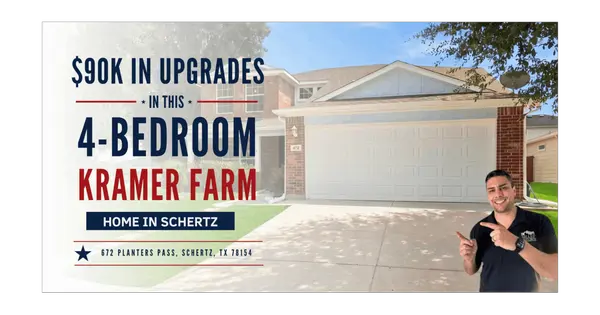
Buyers who walk through 672 Planters Pass in Schertz, one of my listings in Kramer Farm, get the transfer question answered up front, since the 2025 foundation repair carries a lifetime warranty that conveys with the sale. The roof was replaced in 2022, and all three bathrooms were remodeled in 2026. The 2013 Pulte-built two-story has four bedrooms, a main-floor primary suite, and about 3,000 square feet. It is listed at $389,900 and open to VA financing.
The Role of an Independent Engineer
The company that did the work has a stake in saying it holds. An independent structural engineer, hired by you during the option period, can evaluate the current condition, review the repair records, and tell you whether anything needs attention now. That visit is a small step compared with finding a problem after closing. For VA buyers, clear records can also help answer questions when the appraiser reviews the home against the VA Minimum Property Requirements (MPRs).
Seller's Disclosure Red Flags Texas Buyers Should Catch
 A person reviews printed documents with a pen at a desk. Photo: Pexels.
A disclosure with a few yes answers is normal. The ones that deserve a closer look tend to share a handful of patterns, and those patterns stand out when you read the form slowly with a pen in hand:
Vague or Blank Answers
A yes on the form is rarely the problem. Silence usually is. These are the answers worth a written follow-up:
- An unknown beside the roof age or water heater from an owner who has lived in the home for years.
- Whole sections left blank or crossed out.
- A note such as “sold as is” written in place of answers.
- A yes with no explanation beside it.
- A repair described without a date or a company name.
Contradictory or Unexplained Details
A listing can describe a move-in ready home with a new roof while the form lists a roof that is 15 years old. The form says no water damage, and the inspector finds a stained ceiling panel under a bathroom. Most conflicts have a reasonable explanation, but each one deserves a question in writing before your option period closes.
Fresh or Isolated Cosmetic Work
New paint on a single ceiling patch, fresh caulk along a diagonal crack in brick, or new flooring in only one room can be routine touch-ups before listing. They can also sit over something the form does not mention. Point your inspector to each spot and ask the seller what prompted the work.
Late or Outdated Forms
A disclosure that shows up after the contract, a form on an older version, and a notice signed for a listing that expired a year ago all leave gaps. Ask for the current form, completed and dated for this sale, so every answer reflects the home as it stands today.
Putting a Texas Seller's Disclosure to Work Before You Sign
Spotting a concern only helps when you act on it in time. The form is most useful in the days around your offer, and the steps shift a little depending on where you sit in the transaction:
Clarifying the Form in Writing
Send your questions through your agent by email so the answers become part of the record. Ask for the dates of major replacements and the name of any contractor who did structural, roof, or plumbing work.
Pairing the Form With Your Inspection
Hand your inspector a copy of the disclosure before the appointment. The standard resale contract lets buyers pay an option fee for an agreed number of days to inspect and, in most cases, terminate for any reason. The disclosure tells you where to aim that time.
Reviewing the Form From a Distance
Buyers on a permanent change of station (PCS) to a Texas base often write offers with one house-hunting trip or none at all. Ask for the disclosure before you schedule showings, and have your agent confirm flagged items in person or on a live video walk-through. The paperwork does not wait for your report date, so the more of it you read early, the smoother the contract period tends to run.
Weighing the Form as an Investor
Tenant-occupied homes and long-held rentals can carry more unknown answers. I own and self-manage rental homes, so I know how easy it is to lose track of a repair date on a house you do not live in. Ask investor sellers for invoices, work orders, the current lease, and any records from a property manager. I also read drainage, plumbing, and roof answers closely, because those are the items that can turn into late-night calls from tenants.
Completing the Form as a Seller
Sellers get the most from this form by working on it before the listing goes live. Gather receipts, warranties, and permits first, answer from what you know, and use unknown honestly rather than guessing. Disclose past repairs with the paperwork attached, and update the form when something changes during the listing. A thorough, documented disclosure tends to reassure buyers and can reduce back-and-forth during the option period.
Sharing the Form With an Attorney
Some questions belong with a licensed real estate attorney rather than your agent or inspector. That includes whether an exemption applies, what a disclosed lawsuit or easement means for your ownership, how water rights or a private road agreement affect you, and what recourse you might have when a known defect appears after closing.
Reading Your Texas Seller's Disclosure With Confidence
That yes beside previous structural repair looks different now. It is a request for records, not a reason to walk. The answers worth worrying about are the vague ones, the missing ones, and the ones that contradict the inspection. Nothing on the page has to stop you cold, because every line points to a question you can ask or a record you can request.
Working with a military relocation specialist who knows these forms means you are not decoding page two alone at 9 p.m., whether you are touring in person or writing an offer from another duty station.
Read the form before you offer, ask for the file behind every yes, and let your inspector and, when needed, an attorney fill in what the seller could not. The Texas home you choose is far more likely to come with a clear picture instead of a surprise.
Ready to Review a Seller's Disclosure Together?
I am Anthony Sharp with Sharp Realty Group, a U.S. Air Force veteran and REALTOR® who helps buyers, sellers, and investors review seller's disclosures across Schertz, Cibolo, and the JBSA corridor. Send me the form on a home you are considering, or let's go through your own before you list.
Call or text: 210-997-0763
Schedule a time: book a consultation
Email: anthony@sharprealtygrouptx.com
Office: 213 Terramar, Cibolo, TX 78108
Frequently Asked Questions (FAQs)
Is a seller's disclosure required in Texas?
For most sales, yes. Texas Property Code Section 5.008 requires sellers of homes with not more than one dwelling unit to give the buyer a written disclosure notice on or before the contract's effective date.
Some transfers are exempt, such as foreclosure sales and never-occupied new homes, and a real estate attorney can confirm whether one fits your sale.
What happens when the seller gives me the disclosure after I sign?
The statute lets you terminate the contract for any reason within seven days after you receive the notice, and the standard resale contract generally returns your earnest money in that case. Confirm the exact terms of your contract with your agent or an attorney.
Should I walk away from a home with a repaired foundation?
Not necessarily. Foundation repair shows up on resale homes in many parts of Texas, where clay soil can shift slab foundations. What matters is the documentation, the warranty terms, and what an independent structural engineer finds during your option period.
Can a Texas seller be sued for not disclosing a known problem?
Buyers who later find a defect the seller knew about and did not disclose may have legal options, depending on the facts, the contract, and what can be shown. Whether an as-is clause protects a seller also depends on the details. Speak with a licensed real estate attorney about your situation.
Does a Texas seller have to disclose a death in the home?
Section 5.008 states that a seller or agent is not required to disclose a death by natural causes, suicide, or an accident unrelated to the property's condition. Questions about a specific event belong with a real estate attorney.
What changed on the Texas seller's disclosure in 2026?
The current TREC form, No. 55-1, took effect May 28, 2026, and adds questions on insurance, private roads, storage tanks, and conservation easements. TREC also added a separate disclosure for water rights.
* * *
Disclaimer: This article is general information only and does not consider your individual financial, tax, or legal circumstances. Disclosure requirements, TREC forms, market data, and program terms change and are provided as a general guide, not a guarantee. Nothing here is legal advice or a guarantee of financing, approval, appreciation, or resale value. Before making a decision, speak with a qualified professional such as a REALTOR®, a licensed lender, an inspector, or a real estate attorney about your specific situation.
Categories
- All Blogs (260)
- BAH (3)
- For Home Buyers (180)
- For Home Sellers (87)
- For Investors (41)
- For Military Service Members (172)
- For Renters (9)
- JBSA (6)
- Local Events (12)
- Local Real Estate News (38)
- Market Updates (41)
- Military Relocation (40)
- Neighborhood Tours (57)
- PCS Move (103)
- Property Tours (5)
- VA Loans (10)
Recent Posts