
The Pre-Approval Checklist Before You Shop the San Antonio Corridor in 2026
The for-sale sign a pre-approved buyer is ready to act on before others catch up. Source: Pexels
Most buyers headed to the San Antonio corridor start by browsing listings at night, sorting by price, and building a whole picture of the home they want before a single lender has looked at their finances. Then the numbers come in and the picture shifts, sometimes lower than they hoped, sometimes higher than they realized. A mortgage pre-approval is what turns that guessing into a real budget, and doing it first is the difference between shopping the corridor with a plan and touring homes you were never going to buy.
I am Anthony Sharp, a U.S. Air Force veteran and REALTOR® with Sharp Realty Group here in Cibolo, and the northeast San Antonio corridor around Joint Base San Antonio (JBSA) is the market I work every week. Before you tour a single one of the homes for sale in Schertz, getting your pre-approval in order is what turns a wish into an offer a seller will take seriously.
A pre-approval is not a formality you rush at the last minute. It is a documented review that sets your price range, strengthens your offer, and protects your timeline, especially on a permanent change of station (PCS) clock. I want to walk you through exactly what to gather and in what order, the way I would if we were sitting across the kitchen table, so you can shop this corridor ready to move.
Key Takeaways
- A pre-approval is a documented lender review, not a soft prequalification, and most listing agents in the corridor expect one before they schedule a showing.
- Gather your income, asset, credit, and identity documents up front so your file clears underwriting fast when the right home appears.
- Military buyers add the Certificate of Eligibility and a BAH read, since a VA loan pairs zero down with your housing allowance.
- Once you have the letter, protect it by holding off on new credit, job changes, or large deposits until you close.
Why Pre-Approval Comes Before House Hunting in the Corridor
Buyers often want to tour first and sort financing later, and I understand the pull. The problem is that the corridor market rewards buyers who are ready, and a pre-approval is what readiness looks like on paper. Here is what that letter does for you:
The Difference Between Prequalification and Pre-Approval
These two terms get used loosely, and the gap between them matters. A prequalification is an early estimate built on numbers you tell the lender, often with a soft credit check, and it gives you a rough budget. A pre-approval is a fuller review where the lender verifies your income, assets, and credit with documents and issues a letter stating how much they are tentatively willing to lend. Guidance from the Consumer Financial Protection Bureau notes that lenders use these labels differently, so what matters is not the word at the top of the page but whether the lender has verified your finances. A letter that reflects real verification is the one that carries weight when you make an offer.
The Offer Strength a Letter Provides
When you write an offer, the seller is weighing whether you can close. A pre-approval letter tells them a lender has already looked at your file and is prepared to lend, which lowers the risk of the deal falling apart. In a corridor where homes have been sitting longer, sellers still favor the buyer who looks most likely to make it to the closing table. I have watched a well-documented offer beat a higher one that came in without a letter, because the seller trusted the clean file over the bigger number. As someone who self-manages rental properties, I read offers from the seller side too, and a solid pre-approval is the first thing that puts my mind at ease about a buyer. A stronger letter can also give you a little more room to ask for repairs or a rate buydown without the seller worrying the deal will unravel.
The Realistic Price Range It Sets
A pre-approval also protects you from touring homes you cannot comfortably afford or, just as often, from underselling what you can. The lender works backward from a monthly payment that includes taxes and insurance to a purchase price, so you shop inside a number that fits your life rather than a guess. That keeps your house-hunting focused, which is a real advantage when you are relocating on a tight window and cannot afford to waste a weekend on the wrong price tier.
The Core Documents to Gather for Pre-Approval in 2026

The kind of paperwork a lender sorts through before issuing a pre-approval letter. Source: Pexels
Underwriting moves at the speed of your paperwork, so the buyers who assemble a complete file up front tend to clear faster and hit a closing date with less drama. You do not need every item in flawless order, but you do want these pieces ready before you apply:
Income and Employment Records
Lenders want to see stable, documentable income. Have your two most recent pay stubs, your W-2 forms from the last two years, and in many cases your last two years of federal tax returns ready to hand over. If you are self-employed or earn commission, expect the lender to ask for more, often profit-and-loss statements and additional returns. Active-duty service members can use a Leave and Earnings Statement in place of civilian pay stubs, and that document also shows your housing allowance, which a lender can count as qualifying income.
Asset and Reserve Statements
Next, the lender confirms you have the funds for closing costs and any reserves the loan requires. Pull your two most recent statements for each checking, savings, and investment account you plan to use. If a chunk of your down payment or closing money is a gift, the lender will need a signed gift letter and a paper trail showing where it came from. Large, unexplained deposits raise questions in underwriting, so document anything out of the ordinary before it becomes a delay.
Credit and Debt History
The lender pulls your credit as part of pre-approval, but you should know what they will find before they find it. Check your report for errors, old accounts, or anything you can clean up, and get a rough sense of your score. The lender also totals your monthly debts, from car payments to student loans to minimum credit card payments, to calculate your debt-to-income ratio. That ratio drives how much house you qualify for as much as your income does, so paying down a balance or two before you apply can widen your range.
Identity and Residency Records
Finally, the lender needs to confirm who you are and where you have lived. Have a government-issued photo ID and your Social Security number ready, along with a two-year address history. For a corridor relocation from out of state, that address history is routine, so do not let it trip you up. These items are quick to produce, and having them in hand keeps your application from stalling on a technicality.
Document requirements are a general guide and vary by lender and loan type, so confirm your exact list with a licensed lender before you apply.
Extra Pre-Approval Steps for Military and VA Buyers Near JBSA
A large share of the buyers I work with in this corridor are using a VA loan, and that path adds a few items to the checklist that civilian buyers skip. Handle these early and your VA pre-approval moves as smoothly as any other:
Requesting Your Certificate of Eligibility
Your Certificate of Eligibility (COE) proves to a lender that you qualify for the VA home loan benefit. Many lenders pull it through the U.S. Department of Veterans Affairs (VA) system during pre-approval, so you may not have to request it yourself, but it is worth confirming early. Active-duty members generally need a statement of service signed by their command, while veterans use their DD214. The COE confirms your entitlement, and if you have full entitlement you can buy near JBSA with zero down and no VA loan cap in 2026, subject to what your lender approves.
Reading Your BAH Into the Budget
All JBSA installations, including Randolph Air Force Base, Fort Sam Houston, and Lackland Air Force Base, sit inside one San Antonio Military Housing Area, so your Basic Allowance for Housing (BAH) is the same regardless of which gate you report to. For 2026, published JBSA rates run from about $1,359 per month for a junior enlisted member without dependents up to roughly $2,475 for a senior officer with dependents, down about 2.9% from 2025. A lender can count that allowance as qualifying income, which strengthens your file, and the corridor still prices below much of the metro, so many service members keep a full payment at or near their allowance. One thing I tell every incoming family is to treat BAH as a comfortable ceiling rather than a target you have to hit. Plenty of buyers I work with land a notch below their allowance and pocket the difference each month, tax-free, while still building equity during a three-year tour.
Confirming Your Funding Fee Status
The VA funding fee is a one-time charge that helps keep the program running. For 2026, first-time use with no down payment is 2.15% of the loan amount, and subsequent use with no down payment is 3.30%, with the fee dropping when you put money down. Most buyers roll it into the loan. The item I see overlooked most is the exemption. Veterans receiving VA compensation for a service-connected disability are exempt from the fee entirely, which can be thousands of dollars. Your exemption status appears on your COE, so confirm it is current before you set your budget.
BAH figures, funding fees, and program terms are a general guide for 2026 and can change, so verify your exact numbers with a VA-savvy lender and confirm your rate at defensetravel.dod.mil.
Turning Your Pre-Approval Into Buying Power in the Corridor
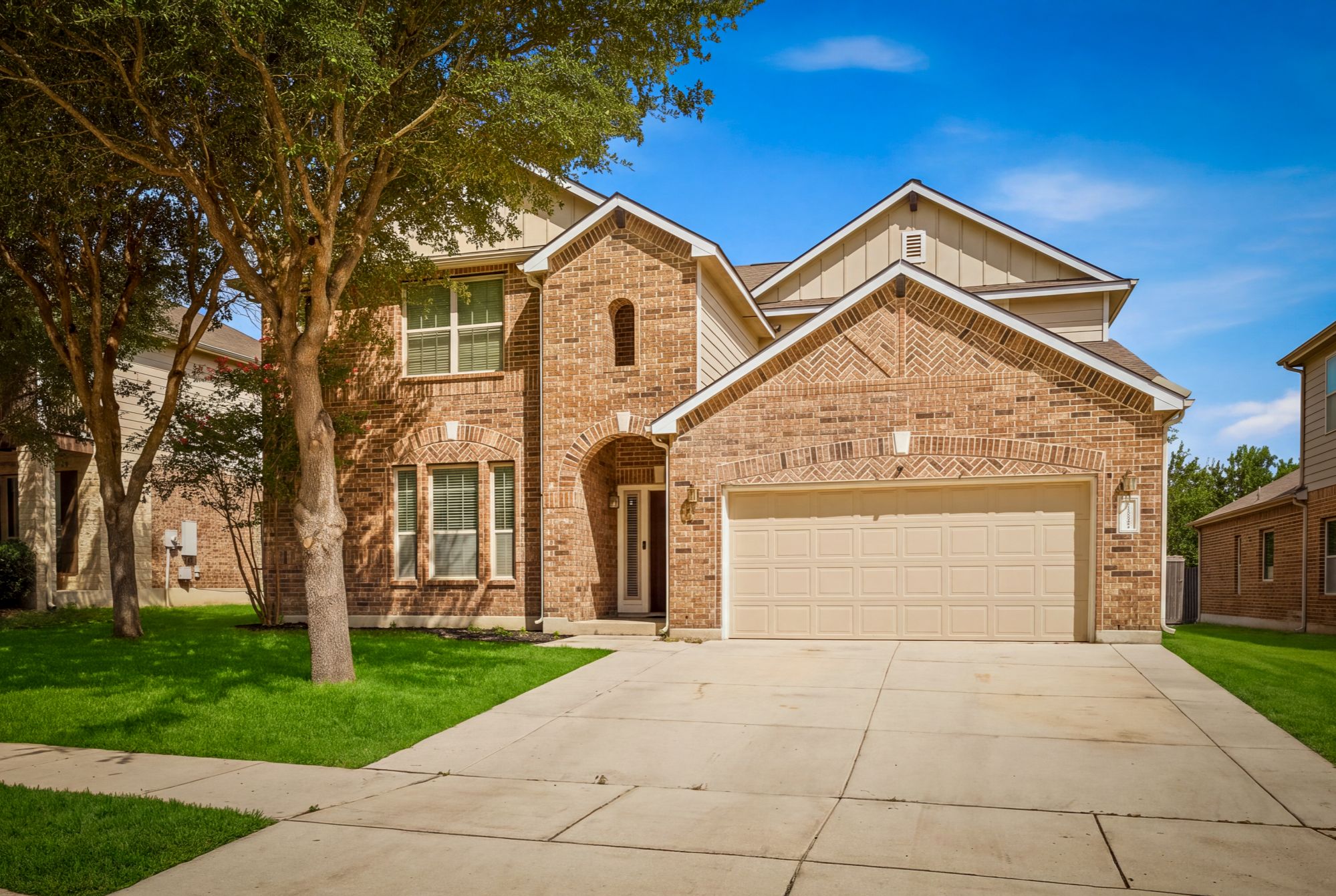
The five-bedroom Schertz home military buyers weigh against their housing allowance. Photo: Sharp Realty Group.
A pre-approval letter is only useful if you know how to read it and how to protect it. The 2026 market gives corridor buyers real room to negotiate, and your letter is what lets you use it. Here is how the pieces come together on a purchase near Schertz and Cibolo:
Setting a Payment That Fits Your Life
The number on your pre-approval is a ceiling, not a target. Decide what monthly payment feels comfortable first, taxes and insurance included, then let the lender work backward to a price. Texas property taxes and homeowners insurance can add several hundred dollars a month on top of principal and interest, and that gap is what surprises first-time buyers. In the San Antonio area, the median sale price was around $315,000 in mid-2026, so the corridor still offers homes that fit a range of budgets, but the payment math is yours to run before you fall for a floor plan. Talk with a tax professional about your specific situation.
Understanding Today's Rate and Concession Room
Rates shape your payment more than almost anything else. The Freddie Mac 30-year fixed average was 6.66% as of August 27, 2026, holding fairly steady through the late summer. With more inventory on the market, corridor sellers have been more willing to offer concessions, and on a VA loan a seller can contribute up to 4% of the home value toward costs like prepaid taxes, insurance, or the funding fee. Some sellers and builders also offer to buy your rate down, which can ease your early payments. Treat any rate figure as directional and get a current quote before you lock.
Comparing Corridor Communities to Your Number
Once your payment range is set, you can match it to the corridor community that fits your commute and family. Schertz and Cibolo offer a mix of established neighborhoods and newer construction, with much of the area served by Schertz-Cibolo-Universal City Independent School District. Universal City and Converse tend to put you a few minutes closer to the Randolph gate, while heading toward Cibolo often trades a few minutes for newer inventory. For a broader read on prices, commutes, schools, and taxes across these towns, my Cibolo and Schertz neighborhood guides break the corridor down community by community.
Protecting Your Pre-Approval Through Closing
A pre-approval is a snapshot of your finances on the day it was issued, and it can come undone if that picture changes before you close. The good news is that keeping it intact is mostly about what you avoid. Between your letter and the closing table, steer clear of the moves that reset the clock:
- Opening new credit cards or financing a car, since new debt changes your debt-to-income ratio.
- Changing jobs or employers, which can pause your file until the lender re-verifies income.
- Making large deposits or transfers that you cannot document with a clear paper trail.
- Missing payments on any existing account, which can drop your score at the worst moment.
- Cosigning a loan for someone else, since that debt counts against your ratio too.
This list is a general guide, and every loan file is different, so run any major financial move past your lender before you make it. When a lender asks for an extra document during this window, answer fast, because a quick reply is often the difference between closing on time and slipping a week.
Shopping the Corridor With Your Financing Handled
The late-night guessing about what you can afford should feel behind you now, because you know the fix is a stack of documents and one honest conversation with a lender. Gather your income, asset, credit, and identity records, add the COE and BAH read if you are using a VA loan, and you walk into this market with a real number instead of a hunch.
You do not have to guess your way through the sequence. Line up your paperwork, choose a lender who knows your loan type, and protect the letter once you have it, and the right home in Schertz, Cibolo, or the towns around them stops being the one that got away. When your financing is handled, you get to shop with confidence and move at the pace your life allows.
Ready to Shop the Corridor Pre-Approved?
I am Anthony Sharp with Sharp Realty Group, a U.S. Air Force veteran and military relocation specialist who helps buyers and military families get ready and buy well across Schertz, Cibolo, and the JBSA corridor. If you want help lining up your pre-approval or an introduction to a lender who knows VA files, let's talk.
Call or text: 210-997-0763
Schedule a time: book a consultation
Email: anthony@sharprealtygrouptx.com
Office: 213 Terramar, Cibolo, TX 78108
Frequently Asked Questions (FAQs)
How long does a mortgage pre-approval take?
With a complete document file, many lenders can issue a pre-approval within a day or two, and sometimes the same day. The delays almost always come from missing paperwork, so gathering your income, asset, credit, and identity records before you apply is what keeps it quick. If your finances are more complex, such as self-employment or recent job changes, plan for a little more back-and-forth.
How long is a pre-approval letter good for?
Most pre-approval letters are valid for 60 to 90 days, because they rely on a credit pull and income snapshot that go stale over time. If your search runs longer, your lender can refresh the letter, usually with updated pay stubs and a new credit check. Ask your lender their specific window so you are not caught with an expired letter when you finally find the right home.
Does getting pre-approved hurt my credit score?
A pre-approval usually involves a hard credit inquiry, which can lower your score by a few points, but the effect is small and short-lived. If you shop several lenders within a short window, the scoring models generally treat those inquiries as one, so you can compare offers without stacking up damage. The stronger letter you gain is well worth the minor dip.
Can I use my BAH to qualify for a mortgage near JBSA?
Yes. Lenders can count your Basic Allowance for Housing as qualifying income on a VA loan, which strengthens your application without a second civilian paycheck. Since all JBSA installations share the same San Antonio Military Housing Area, your rate depends on your pay grade and dependency status, not the gate on your orders. Confirm the exact figure with your lender and the official Department of Defense tables.
Do I need a pre-approval before I start touring homes?
You do not legally need one to look, but most listing agents in the corridor expect a pre-approval before they schedule a showing, and you cannot write a strong offer without it. Getting it squared away early means you can move the day the right home appears rather than scrambling while other buyers get ahead of you. On a PCS timeline, that head start matters even more.
What is the difference between pre-approval and final loan approval?
A pre-approval is the lender's tentative commitment based on your verified finances before you have a specific home. Final approval comes after you are under contract, once the lender reviews the property appraisal and completes full underwriting on the actual purchase. That is why protecting your finances between the two steps matters, since a change in your file can affect the final decision.
* * *
Disclaimer: This article is general information only and does not consider your individual financial, tax, or legal circumstances. Mortgage rates, BAH figures, VA program terms, and funding fees change and are provided as a general guide, not a guarantee. Nothing here guarantees financing, approval, appreciation, or resale value. BAH and market data are estimates, verify at defensetravel.dod.mil. Before making a decision, speak with a qualified professional such as a REALTOR®, a licensed lender, or an attorney about your specific situation.
Categories
- All Blogs (276)
- BAH (4)
- For Home Buyers (192)
- For Home Sellers (91)
- For Investors (42)
- For Military Service Members (184)
- For Renters (10)
- JBSA (7)
- Local Events (12)
- Local Real Estate News (40)
- Market Updates (42)
- Military Relocation (41)
- Neighborhood Tours (58)
- PCS Move (109)
- Property Tours (6)
- VA Loans (14)
Recent Posts