
Upsize Your Home in Schertz: When It Makes Sense in 2026
Key Takeaways
- It may be time to upsize your home in Schertz when you have outgrown it, plan to stay several years, and can afford the new payment at today's rate.
- With the 30-year average at 7.24% in late October, price the full new payment against your current one before you fall for a floor plan.
- A sale contingency, bridge financing, or a rent-back can help you sell and buy without carrying two payments for long.
- Builder and seller buydowns may soften a higher rate, and military owners can weigh remaining VA entitlement and an assumable loan.

Two-story home with a garage and front lawn, a common move-up size. Source: Pexels
Your three-bedroom in Schertz worked fine until a second desk took over the dining room and the garage stopped fitting a car. You want more space, but your current loan carries a rate that starts with a three, while San Antonio mortgage rates on a new purchase now start with a seven. That gap leaves you stuck on one question, whether this is the year to upsize your home in Schertz or the year to wait it out.
I am Anthony Sharp, a U.S. Air Force veteran and REALTOR® with Sharp Realty Group in Cibolo, and I help families buy and sell homes across Schertz and the Joint Base San Antonio (JBSA) corridor. Owners who tour larger new builds, like the new homes at Hallie's Cove, often walk out asking whether the extra room is worth giving up the rate they locked years ago.
There is no one right answer for everyone. What follows is how I would walk you through the decision, from the payment math at a 7% rate to the ways people sell and buy at the same time, so you can decide whether upsizing fits your timeline now or later.
How San Antonio Mortgage Rates Change the Upsize Math in 2026
Rates moved quickly this fall, so the numbers you heard in the spring may no longer apply. Before you think about square footage, it helps to see where rates stand and what they do to a move-up payment:
The Rate Picture in Late 2026
Freddie Mac's weekly survey put the average 30-year fixed rate at 7.24% for the week of October 29, 2026. That was a small dip from 7.32% a week earlier, but still more than a full point above the 6.17% average from the same week last year. The 15-year fixed averaged 6.60%. Rates rose from late August into early October, a period that included the Federal Reserve's September 16 rate increase, before easing in the last two weeks of October.
Keep in mind these are national averages, and Freddie Mac updates them every Thursday. The rate you are quoted may land higher or lower depending on your loan type, credit, down payment, and lender, so use the weekly figure as a temperature check rather than your actual rate.
The Rate Gap on Your Current Loan
That higher rate hits hardest for owners who bought or refinanced in 2020 and 2021, when rates were far lower. Selling usually means paying off that loan, so upsizing costs more than the difference in price. You are also swapping cheap borrowed money for more expensive borrowed money on every dollar you finance.
Economists call this the lock-in effect, and it helps explain why many owners stay put after outgrowing their homes. Still, a low rate only pays off while the home fits your life. It is a trade-off worth measuring, not a reason to avoid the question.
The Payment Difference on a Larger Home
Seeing the numbers side by side makes the gap clearer. In this illustration, an owner who originally borrowed $260,000 at 3.25% sells and buys a $550,000 home, putting $100,000 of equity down and financing the rest at 7.25%.
| Example Item | Current Home | Upsized Home |
|---|---|---|
| Loan amount | $260,000 | $450,000 |
| Interest rate | 3.25% | 7.25% |
| Monthly principal and interest | About $1,132 | About $3,070 |
Monthly principal and interest climbs by roughly $1,938, before property taxes, insurance, or any homeowners association dues. Small rate changes add up as well. On the same $450,000 loan, 6.75% instead of 7.25% would trim about $151 a month.
These figures are rounded and for illustration only. Your actual rate and payment depend on your lender, credit, and loan program, so ask a licensed lender for a written Loan Estimate.
The Equity in Your Current Home
Equity is what offsets that jump. Third-party estimates, including Zillow's home value index, have shown Schertz values roughly flat to slightly lower over the past year, so most of the equity owners hold today likely came from earlier appreciation and the principal they have paid down. That equity can fund your down payment, shrink the new loan, and often lower the payment more than rate shopping can. Value estimates differ by source and neighborhood, so treat any citywide figure as a general reference.
For a dependable number, look past online value tools. A current market analysis and a net-proceeds estimate, after selling costs and your loan payoff, show what you can realistically put toward the next home.
When It Makes Sense to Upsize Your Home in Schertz
Rates are only one part of the decision. Upsizing tends to go more smoothly when several of these line up at once:
- Your home no longer fits daily life, from shared bedrooms to a home office squeezed into a corner.
- You expect to stay several years, often five or more.
- Your income comfortably supports the new payment at today's rate, with room left for savings.
- You hold enough equity to cover a down payment and closing costs on the next home.
- Your emergency fund could handle a short overlap between two homes if timing slips.
- Your reason to move is a real need, not only a model home that caught your eye.
These signs are a general guide, and the right timing depends on your finances, family, and plans.
Outgrowing the Floor Plan
Space problems usually show up in specific rooms. A bedroom doubling as an office, kids who need their own rooms, or a parent moving in are concrete reasons that hold up even when rates are high. Features many move-up buyers look for, such as a single-story layout or a three-car garage, also tend to come at higher price points.
Before you shop, write down the two or three problems your current home cannot solve. That short list keeps you focused on homes that fix them, not on upgrades that raise the payment without changing how you live.
Planning a Longer Stay
Time matters because every move carries costs on both ends, including agent compensation, title charges, lender fees, and the move itself. These costs vary by lender, title company, and contract terms, so ask for written estimates on both the sale and the purchase. The longer you stay in the larger home, the more time you have to spread those costs out and build equity.
A family expecting to relocate within two or three years may come out ahead by staying put, finishing a room, or renting a larger home until the next move. A family planning to stay through the kids' school years has a stronger case for buying now.
Weighing a Rate Drop Against Today's Inventory
Nobody can tell you where rates go next, and I will not pretend to. What you can measure is the inventory in front of you. According to Texas Public Radio's coverage of San Antonio Board of REALTORS® data, the area's September median price came in a little under $302,000, and sales were down about 2% from a year earlier. The board's recent monthly reports have also shown close to six months of supply.
That gives buyers more choice and more room to negotiate than they had a few years ago. Waiting for a lower rate could mean competing with more buyers later, while buying now may mean negotiating with fewer. These figures cover a wide area and change month to month, so your neighborhood may look different.
Selling and Buying at the Same Time in the San Antonio Market
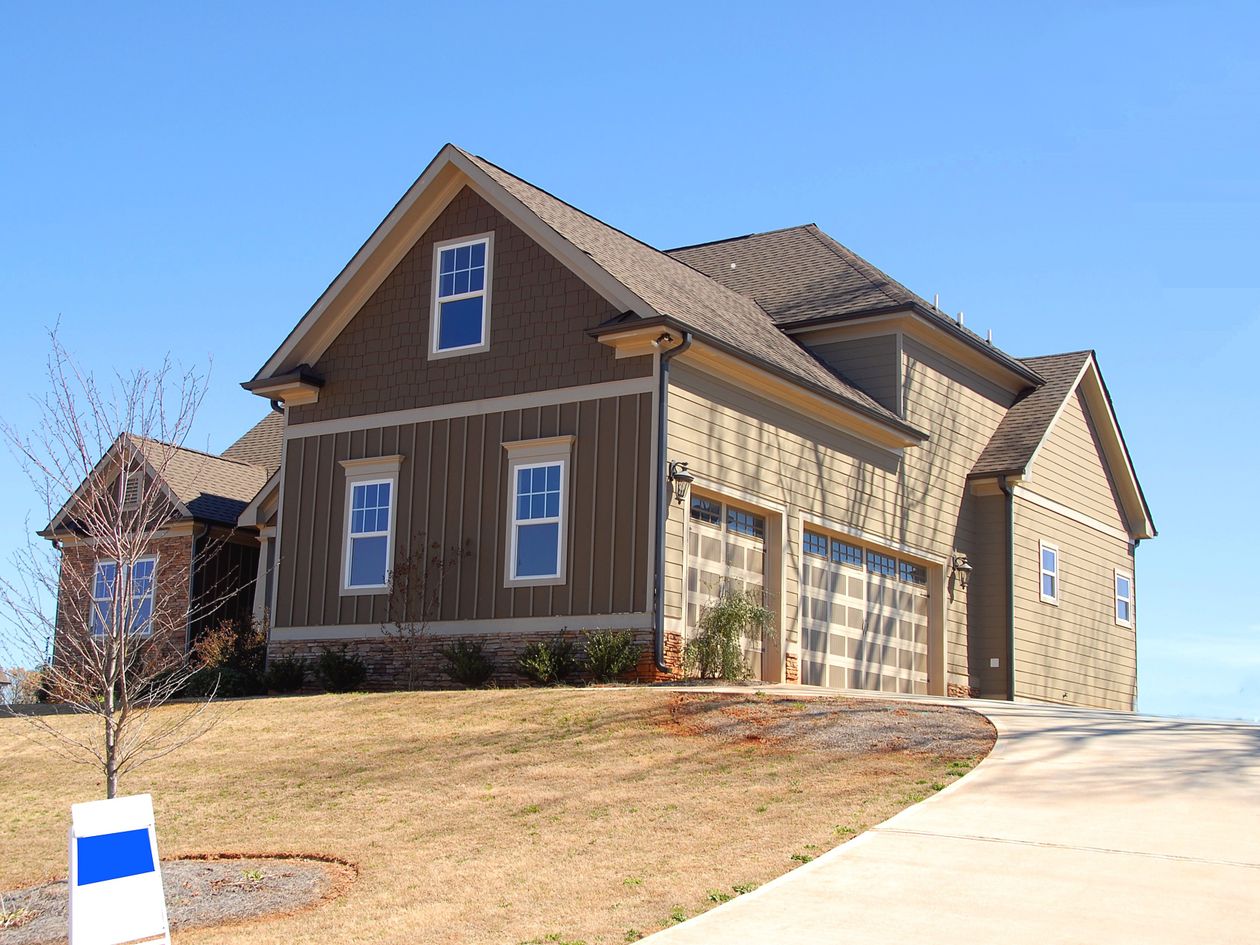
Family home with a garage and landscaped lawn, ready for a move-up sale. Source: Pexels
Once you decide to move up, the next challenge is timing. Most move-up buyers in the corridor need the sale of their current home to fund the next one, and these are the tools that come up most often when planning that sequence:
A Home Sale Contingency
A home sale contingency lets you make an offer that depends on selling your current home. In Texas, that is done with the Texas Real Estate Commission (TREC) addendum for the sale of other property by the buyer. It protects you from owning two homes at once, but it makes your offer less attractive than one without conditions. TREC revises its forms from time to time, so your agent should use the current version.
Contingent offers tend to work better on homes that have been sitting for a while, or with a builder willing to accept one on a home still under construction. With more listings on the market this year, some sellers may be more open to them than they were in 2022.
A Bridge Loan or Home Equity Line of Credit
To make a cleaner offer, some owners tap their equity before they sell. A bridge loan or a home equity line of credit (HELOC) on your current home can supply the down payment for the next one before your sale closes. Each adds a payment with its own rate and fees, and lender rules vary. Some lenders will not open a line of credit on a home that is about to be listed.
Before you count on a HELOC to buy your next home, ask a licensed lender whether you qualify while still carrying your current mortgage, since that answer often decides which option works.
A Seller Rent-Back
A rent-back flips the order. You sell first, then stay in your current home for a set period after closing while you shop or wait for a new build to finish. Texas has a standard seller's temporary lease form for this, and the length, deposit, and daily rate are negotiable, though the buyer's lender often limits how long you can stay.
Because your equity turns into cash before you write your next offer, a rent-back can make you a stronger buyer without forcing a second move.
A Sell-First Plan
Some families take the sell-first route a step further. They sell, move into a short-term rental, and buy with cash in hand and no contingency. It means moving twice, but it removes the risk of carrying two mortgages and puts you in a strong negotiating position. With homes taking longer to sell this year, having your current home under contract first removes the biggest unknown.
Contract forms, lender rules, and contingency terms change and vary by transaction, so treat this as a general guide and review your options with your agent, a licensed lender, and, where needed, a real estate attorney.
Managing Mortgage Rates and Costs on a Schertz Upsize
Whichever path you choose, a higher rate does not mean you have to accept the first quote you see. These levers can bring the payment on a larger home closer to your comfort zone:
Using Builder Buydowns on New Construction
Many builders around Schertz and Cibolo have offered rate buydowns and closing-cost credits instead of cutting prices. Highland Homes, for example, has recently listed plans at Hallie's Cove starting in the mid-$600,000s, ranging from roughly 2,800 to 3,900 square feet, and builder pricing and incentives can change week to week. Highland lists the community in the Schertz-Cibolo-Universal City Independent School District, so some owners moving up can stay in the same district. Attendance zones can shift as the area grows, though, so confirm the zoned campus for any homesite.
Not every buydown works the same way. A permanent buydown lowers your rate for the life of the loan, while a temporary 2-1 buydown only helps for the first two years before the full note rate applies. Terms vary by builder, lender, and loan program, so ask for the payment at the full rate and compare the builder's lender against an outside quote before you commit.
Asking Sellers to Fund a Buydown on Resale
Resale sellers face the same slower market, and some would rather offer a concession than cut the list price. A seller-paid buydown can lower your rate for the life of the loan or for the first few years, and in some cases it lowers the payment more than the same dollars taken off the price.
Seller contributions are capped by loan program, and the limits differ between VA, Federal Housing Administration (FHA), and conventional loans. Confirm the limit with your lender before you write the offer, and make sure the appraisal supports the contract price.
Planning a Refinance With Caution
A refinance later may lower your payment if rates fall, but it is not something to count on. Refinancing carries its own closing costs, which vary by lender, requires you to qualify again, and only helps if rates drop far enough to make the math work. My advice is to buy a payment you can live with for the long haul and treat any future refinance as a bonus.
Budgeting for Property Taxes on a Larger Home
Property taxes are where upsizers get surprised most often. In Texas, the 10% annual cap on a homestead's appraised value does not carry over to your next home. On the new home, the cap generally starts the year after you first qualify it for a homestead exemption, so until then the appraisal district can value it at full market value.
The school district homestead exemption is $140,000 under current state law, an amount the Legislature and voters can change. As you sort through the Texas property tax exemptions you may qualify for, keep in mind the application goes to your county appraisal district, not your lender. Local taxing units also set their rates each year, so the bill depends on where the home sits.
New builds add a timing wrinkle. Buyers comparing new construction property taxes against those on a resale home should know the first bill may reflect only the lot, with a sizable jump once the finished home is appraised. I protest my own appraisals most years, and I recommend budgeting the full escrow amount and talking with a tax professional rather than trusting a first-year estimate.
Buydown terms, concession limits, tax rates, and exemption rules vary by lender, loan program, and taxing unit and can change, so confirm current details before you rely on them.
As you scroll through the featured homes for sale across the corridor, compare each one by its payment at today's rates, not just its price. I can run those numbers on any home on your short list.
Upsizing Near JBSA With VA Loans and PCS Orders

Couple reviewing loan paperwork at a kitchen table before an upsize. Source: Pexels
For military families, orders and VA entitlement add a few questions civilian buyers do not face:
Your Remaining VA Entitlement
A U.S. Department of Veterans Affairs (VA) home loan is not a one-time benefit. Depending on your situation, you may be able to keep your current home, rent it out, and buy a larger home with your remaining entitlement, or sell and have your full entitlement restored. The VA sets these rules and can change them, so confirm where you stand before you plan around them.
With full entitlement, there is no VA loan limit, though your lender still decides how much you qualify for. With partial entitlement, the VA uses the county conforming limit to calculate your remaining entitlement. The Federal Housing Finance Agency set that limit at $832,750 for most Texas counties in 2026, and depending on the price, you may need a down payment. The VA also lists a funding fee of 3.3% for subsequent use with less than 5% down, though veterans receiving compensation for a service-connected disability are generally exempt. A lender who handles VA loans regularly can confirm your exact entitlement.
Your Assumable Low-Rate Loan
Your current loan may also help when you sell. VA and FHA loans are generally assumable, so a qualified buyer may be able to take over your existing rate, which can stand out when new loans start near 7%.
The catch is that your entitlement can stay tied to that loan unless the buyer is an eligible veteran who substitutes their own. Assumptions also need the loan servicer's approval, and processing times and fees vary, so weigh one carefully with your lender before you market it as a feature.
Your Next Set of Orders
Your report date often sets the upsize timeline for you. A permanent change of station (PCS) within the next two or three years usually argues for renting a larger home or holding off, since a short stay leaves little time to recover the costs of buying and selling. A longer tour, or a plan to retire in the area, changes that math.
I served nine years in the Air Force, so I know how quickly plans can shift. When new orders are possible, it helps to build in options, such as buying a home that could work as a rental later. Self-managing rentals in this corridor has taught me that a JBSA-area home can often rent well because military demand returns every PCS season, but you are still the one fielding repair calls, so budget for maintenance, vacancy, and possibly a property manager.
Renting out the old home can also affect your taxes when you sell it later. Under Internal Revenue Service rules, service members on qualified official extended duty may be able to pause the five-year test for the home sale tax exclusion for up to 10 years. Tax law can change, so ask a tax professional how a rental period affects you.
VA entitlement, funding fees, loan limits, and assumption rules can change and depend on your service history, so treat these figures as a general guide.
Upsizing With Confidence While Rates Sit Near 7%
You started with one question, whether giving up a low rate for more room is a smart move or an expensive mistake. You can now answer it for your own situation by pricing the new payment at today's rate, being honest about how long you will stay, and choosing a sell-and-buy path that keeps you from carrying two homes. Whether you work through these steps on your own or with a Military Relocation Professional (MRP) in San Antonio, the goal is a payment and a timeline you can live with.
Upsizing does not have to be all or nothing, and it does not have to happen this month. When the space problem is real, the payment fits, and your timeline gives the new home room to pay off, you can move forward knowing the rate is a cost you chose with clear eyes. When those pieces are not lined up yet, waiting is a decision too, and it can be a sound one.
Ready to Map Out Your Schertz Upsize?
I am Anthony Sharp with Sharp Realty Group, and I help families in Schertz, Cibolo, and across the JBSA corridor decide when and how to move up. Whether you want a net-proceeds estimate on your current home or a side-by-side payment comparison on a larger one, let's talk.
Call or text: 210-997-0763
Schedule a time: book a consultation
Email: anthony@sharprealtygrouptx.com
Office: 213 Terramar, Cibolo, TX 78108
Frequently Asked Questions (FAQs)
Is 2026 a good time to upsize in Schertz with rates above 7%?
It can be, depending on your situation. Higher inventory and slower sales give move-up buyers more room to negotiate on price, concessions, and builder incentives than they had a few years ago.
The deciding factors are whether you have outgrown your home, how long you plan to stay, and whether the new payment works at today's rate without counting on a refinance.
How much more will my mortgage payment be if I upsize?
That depends on the new price, your equity, and your rate. As one illustration, moving from a $260,000 loan at 3.25% to a $450,000 loan at 7.25% raises principal and interest from about $1,132 to about $3,070 a month, before taxes and insurance.
A licensed lender can give you a written Loan Estimate with your actual numbers.
Can I buy a bigger home before I sell my current one in Texas?
Yes, through a few common routes. You can write an offer contingent on your sale, use a bridge loan or a home equity line of credit for the down payment, or carry both homes briefly if you qualify for two payments. Qualifying rules for each option vary by lender.
Each option has trade-offs in cost and offer strength, so review them with your agent and lender before you list.
Do property taxes go up when I upsize in Texas?
Often, yes. The 10% homestead cap does not carry over, and on the new home it generally starts only the year after you first qualify for the exemption. A higher value usually means a higher bill even after the $140,000 school district homestead exemption, and local tax rates are reset every year.
File your homestead exemption with your county appraisal district, budget the full escrow amount, and check with a tax professional on your specific numbers.
Can I use a VA loan again to buy a larger home near JBSA?
In many cases, yes. You may be able to sell and restore your entitlement, or keep your current home and buy with remaining entitlement. With partial entitlement, the $832,750 county limit becomes part of the math, and you may need a down payment depending on VA rules and your lender.
A lender experienced with VA loans can confirm your entitlement, and I can help you plan the timing around PCS orders near JBSA.
Should I wait for mortgage rates to drop before upsizing?
Rates are hard to predict. Waiting may lower your rate, but it could also bring more competing buyers and higher prices.
A practical approach is to buy only when the payment works at today's rate, so a future drop becomes an option to refinance rather than a requirement.
* * *
Disclaimer: This article is general information only and does not consider your individual financial, tax, or legal circumstances. Market data, mortgage rates, builder incentives, VA program terms, and tax rules change and are provided as a general guide, not a guarantee. Nothing here guarantees financing, approval, appreciation, or resale value. Before making a decision, speak with a qualified professional such as a REALTOR®, a licensed lender, a tax professional, or an attorney about your specific situation.
Categories
- All Blogs (292)
- BAH (4)
- For Home Buyers (203)
- For Home Sellers (95)
- For Investors (45)
- For Military Service Members (195)
- For Renters (10)
- JBSA (7)
- Local Events (12)
- Local Real Estate News (40)
- Market Updates (43)
- Military Relocation (42)
- Neighborhood Tours (58)
- PCS Move (112)
- Property Tours (7)
- VA Loans (19)
Recent Posts