

Do You Need a Structural Engineer's Foundation Inspection When Buying in Cibolo?
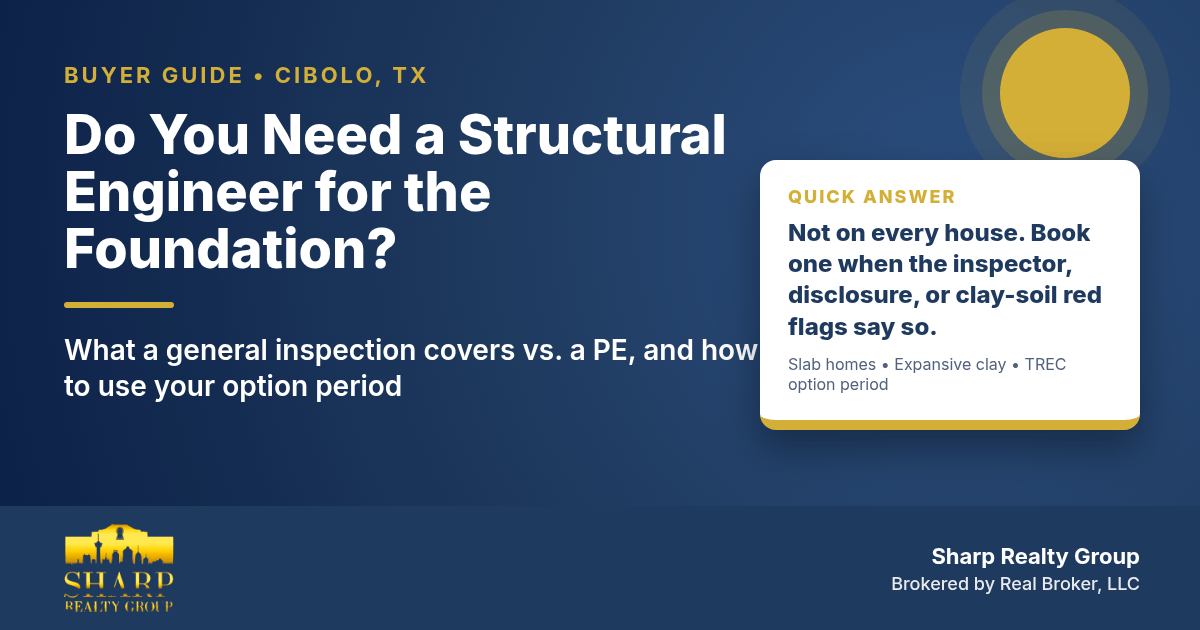
Do Cibolo buyers need a structural engineer for the foundation?
Not on every house. A TREC-licensed general home inspector gives you a written opinion on how the foundation is performing from a limited visual survey. A Texas-licensed Professional Engineer (PE) digs deeper — often with floor elevation measurements and a sealed report. In Cibolo, where many homes sit on expansive clay and slab foundations, I treat the engineer as a specialty call during the option period, not an automatic add-on.
By Anthony Sharp | November 10, 2026
If you're under contract on a house in Cibolo (or Schertz or Selma), you've probably heard some version of: "Make sure you get a foundation inspection by an actual structural engineer." That advice shows up a lot around here, including in local threads when people ask about moving to Cibolo.
Here's the honest truth: clay soil moves with wet and dry seasons. Slab homes ride that movement. Some houses handle it fine for decades. Others show doors that won't latch, stair-step cracks in the brick, or floors that feel off. The question isn't "does Cibolo have clay?" It does. The question is whether this house needs an engineer's eyes during your option period.
So we're on the same page, here's how I walk buyers through it.
Why Cibolo foundations get so much attention
A big stretch of the San Antonio–Austin corridor sits on expansive clays (Blackland Prairie soils, including series like Houston Black). Those clays swell when they're wet and shrink when they're dry. Your slab sits on top of that seasonal change. Over time, differential movement — one part of the house moving more than another — is what shows up as cracks, sticky doors, and sloping floors.
You don't have to guess the soil under a specific lot. The free USDA Web Soil Survey lets you pull the mapped soil series for a parcel. That two-minute check is useful context before you write an offer. It is not a substitute for an inspection.
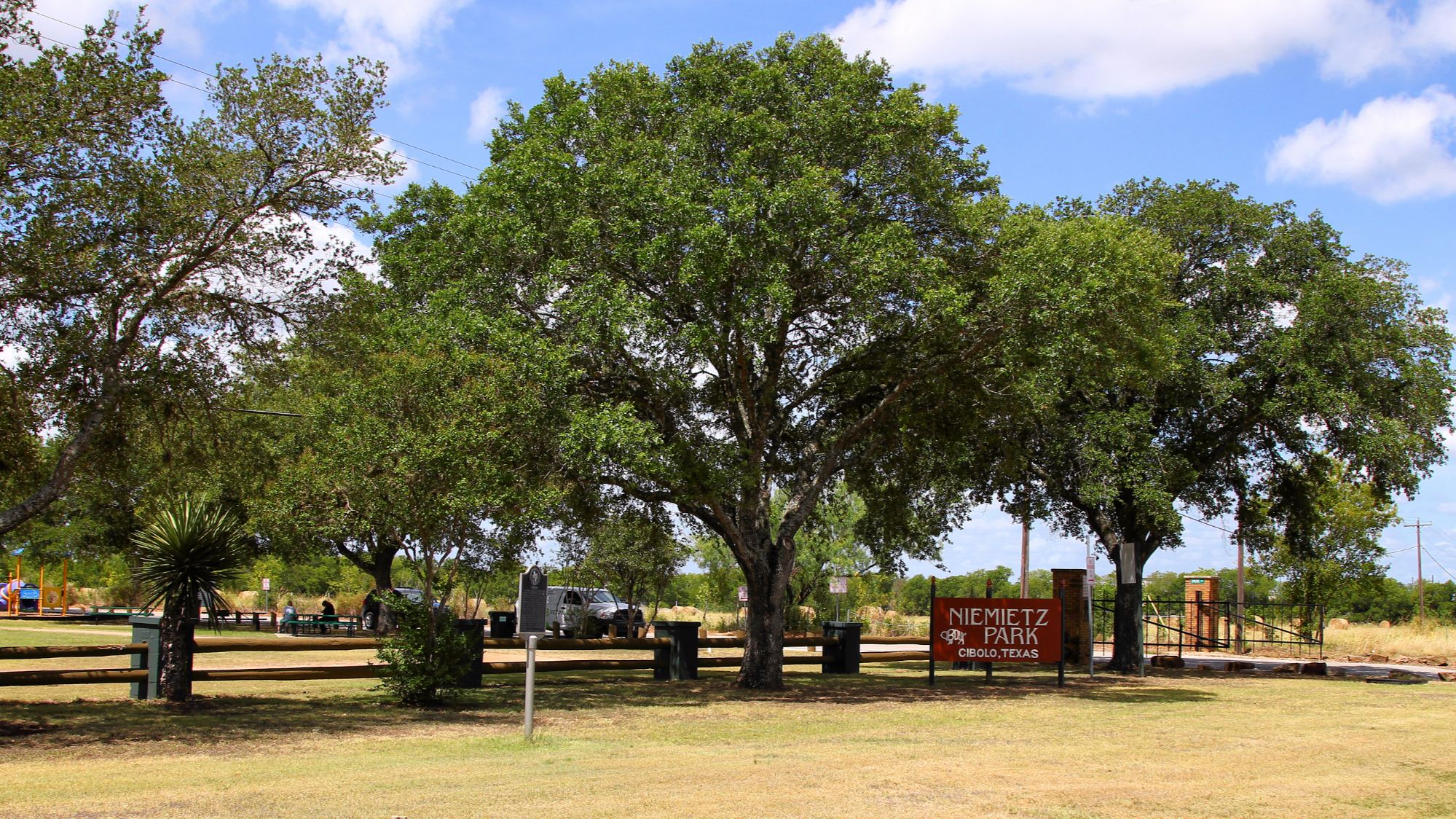 Local context for Cibolo buyers. Photo: Larry D. Moore, CC BY 4.0, via Wikimedia Commons
City of Cibolo keeps a baseline for new builds
Under Cibolo Ordinance No. 1410, builders of new homes have to take foundation elevation measurements after the pour and submit them to the City's Building Department. The point is a baseline record you can compare later if someone suspects movement.
If you're buying a newer Cibolo home, ask for those records. Homeowners (and, through an Open Records Request, interested parties working with the City process) can request foundation elevation records from the City. Start with the City's Foundation Inspections page and the Open Government / City Secretary request process. Pair that baseline with whatever your inspector and — if needed — your engineer measure now.
General home inspection vs. structural engineer
These are different jobs. Don't treat a free visit from a foundation repair company as either one.
What a TREC general inspector does
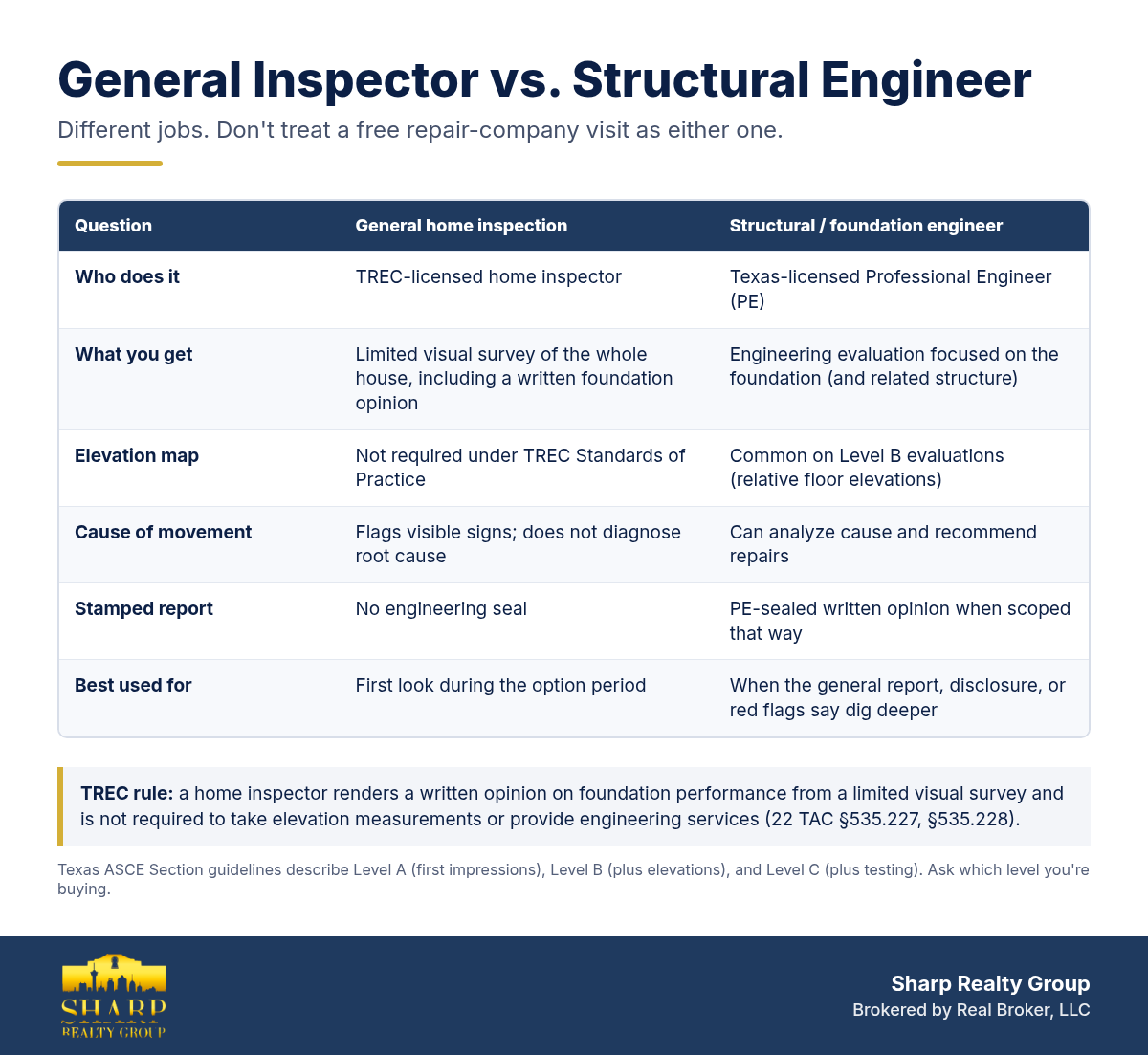
Under the Texas Real Estate Commission Standards of Practice, a licensed inspector:
- Renders a written opinion on the performance of the foundation
- Reports the foundation type and present, visible signs of adverse performance (binding doors, sloping floors, masonry cracks, and similar)
- Works from a limited visual survey of the accessible systems of the house
The same rules are clear about what the inspector is not required to do: take elevation measurements or provide engineering services. So if the report says "recommend evaluation by a licensed structural engineer," that is the handoff — not a failure of the inspector.
What a structural / foundation engineer does
A Texas-licensed Professional Engineer can:
- Evaluate cause of movement, not just visible symptoms
- Measure relative floor elevations (common on a Level B evaluation)
- Deliver a written report, often sealed, that lenders, sellers, and repair contractors can actually use
The Texas Section of ASCE publishes guidelines for evaluating residential foundations. Version 3 (2022) describes three investigation levels:
- Level A — first impressions: documents review, interview, visual walk-through
- Level B — Level A plus relative floor elevations and reported deflection / tilt
- Level C — Level B plus testing the engineer thinks is needed (soil, plumbing, materials, and so on)
Ask which level you're buying. A cheap "look" that isn't scoped to elevations may not answer the question you actually have.
When I recommend booking a PE
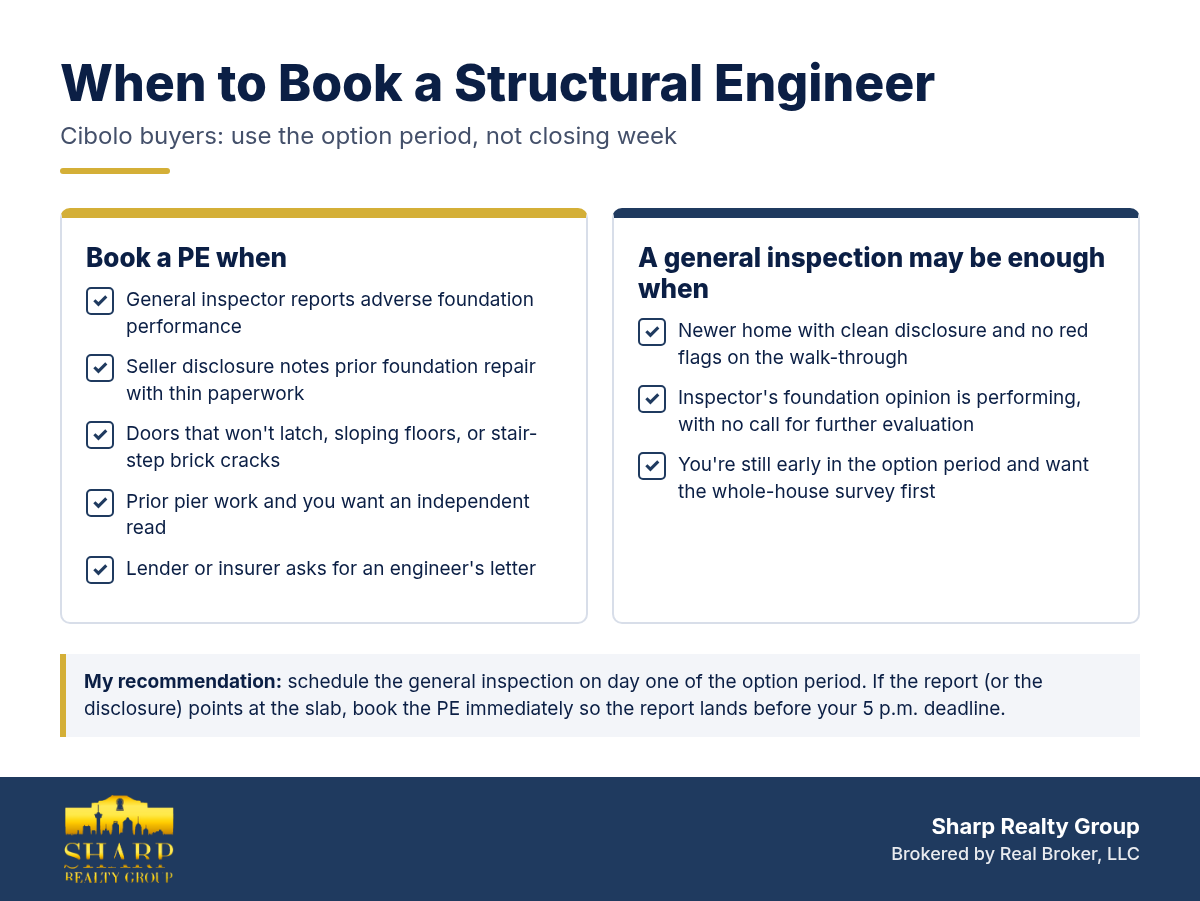
Book a Texas-licensed PE when:
- The general inspector reports adverse foundation performance or recommends further evaluation
- The seller's disclosure notes prior foundation repair and the paperwork is thin
- You see sticky doors, sloping floors, or stair-step brick cracks on the walk-through
- There is prior pier work and you want an independent read before you buy the repair history
- A lender or insurer asks in writing for an engineer's letter
A general inspection may be enough when:
- It's a newer home with a clean disclosure and no red flags on the walk-through
- The inspector's foundation opinion is performing, with no call for further evaluation
- You're still early in the option period and need the whole-house survey first
My recommendation: don't skip the general inspection to "save" for the engineer. Use the general report to decide whether the PE is worth it on this house.
Cost ranges (industry quotes — get your own)
Published fee ranges from Texas licensed PE practices for a residential foundation evaluation commonly fall around $350–$1,500. Many standard slab evaluations that include elevations are quoted around $500–$800. These are industry figures, not SABOR data and not a Sharp Realty Group quote — costs vary, so get written quotes from several Texas-licensed PEs. Size, age, access, rush timing, and whether you need Level C testing all move the number.
Get a written quote for the address you're buying. And hire a PE who works for you — not a free estimator from a company that sells piers. Confirm the license on the Texas Board of Professional Engineers and Land Surveyors site before you pay.
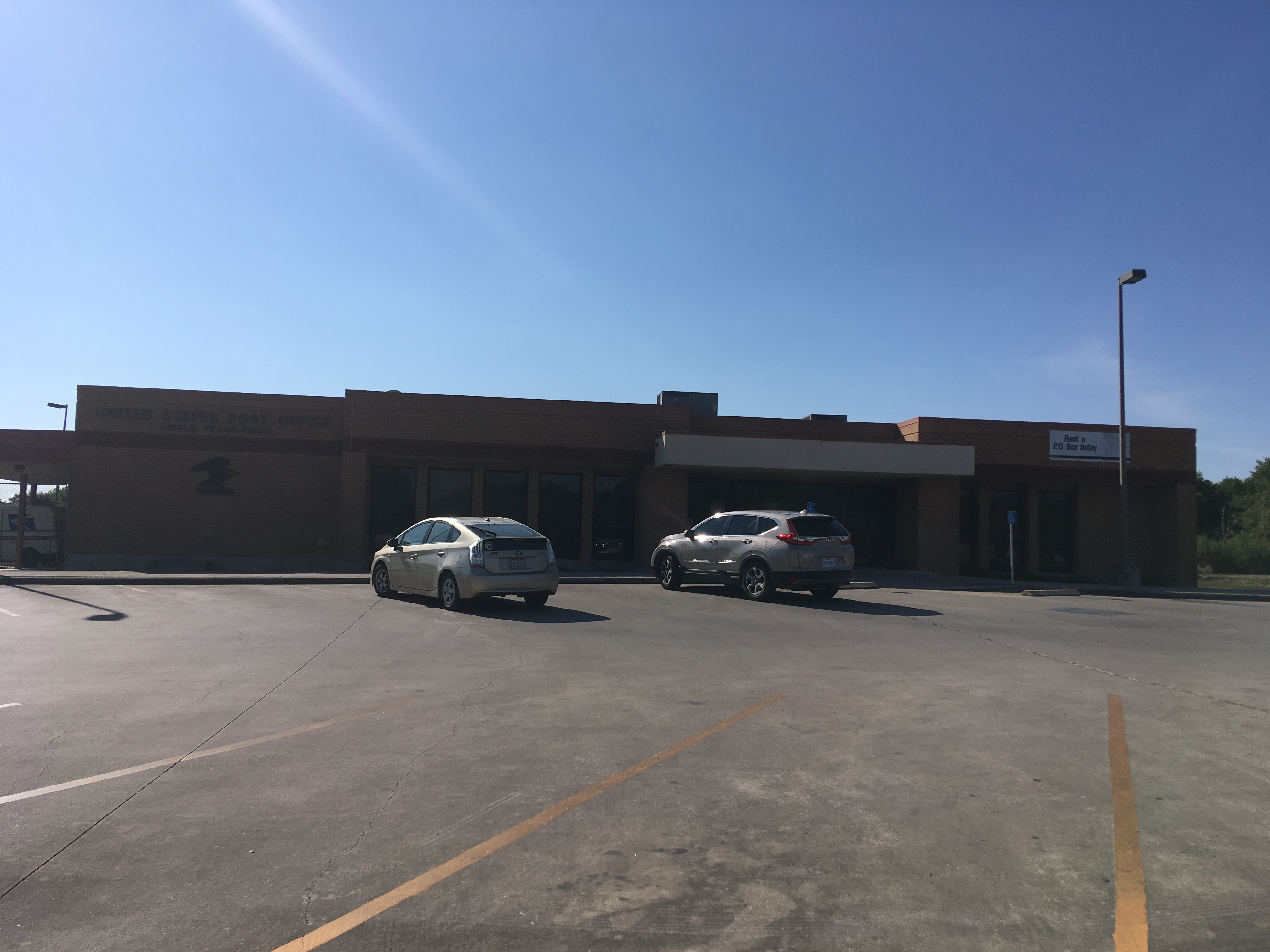 Cibolo, TX. Photo: Jonmallard, CC BY-SA 4.0, via Wikimedia Commons
How this fits the Texas option period
The option period on a TREC contract is your due diligence window. Per the Texas Real Estate Research Center, it exists so you can do more than a walk-through — including specialty inspections like roof, foundation, hydrostatic, or environmental testing — before you're locked in.
Key mechanics (confirm on your contract; this is general information):
- The number of days is negotiated
- Days are calendar days, counted from the effective date as day zero
- The unrestricted right to terminate ends at 5 p.m. local time on the last day
- You must give written termination notice to use that right
- The option fee is not refundable
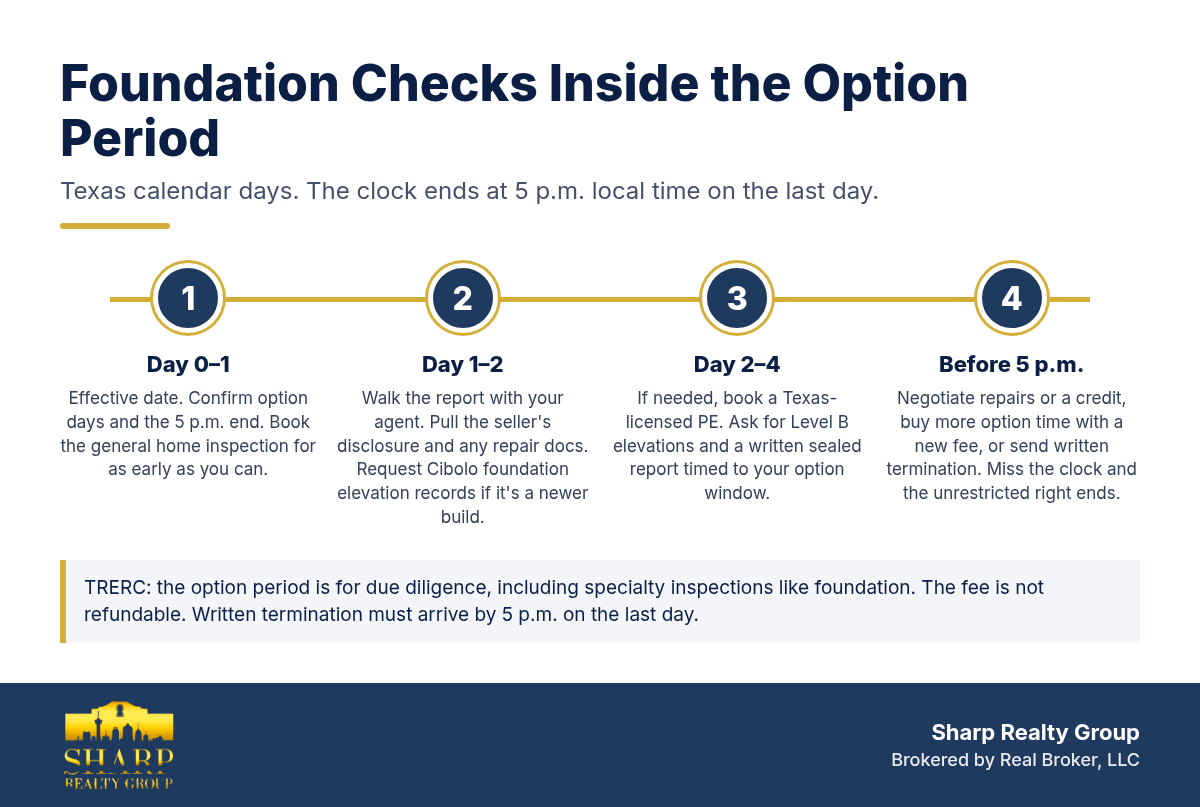
A simple order of operations
- Day 0–1: Confirm option days and the 5 p.m. end. Book the general home inspection as early as you can.
- Day 1–2: Review the report. Read the seller's disclosure. Request Cibolo elevation records if it's a newer build. Gather any prior repair docs.
- Day 2–4: If the report or disclosure points at the slab, book a Texas-licensed PE. Ask for elevations (Level B) and a report timed to your option window.
- Before 5 p.m. on the last day: Negotiate repairs or a credit, purchase additional option time (new fee), or send written termination. Miss the clock and the unrestricted right ends.
You can still inspect after the option period under Paragraph 7 in many contracts — but without the option, you generally can't terminate and get earnest money back just because you don't like what you found. Build the window long enough to finish both inspections when clay-soil risk is on the table.
Read more on buying a home in San Antonio without skipping due diligence and the blue-tape inspection checklist for new builds. For maintenance after you own the home, see protecting a San Antonio home from foundation issues.
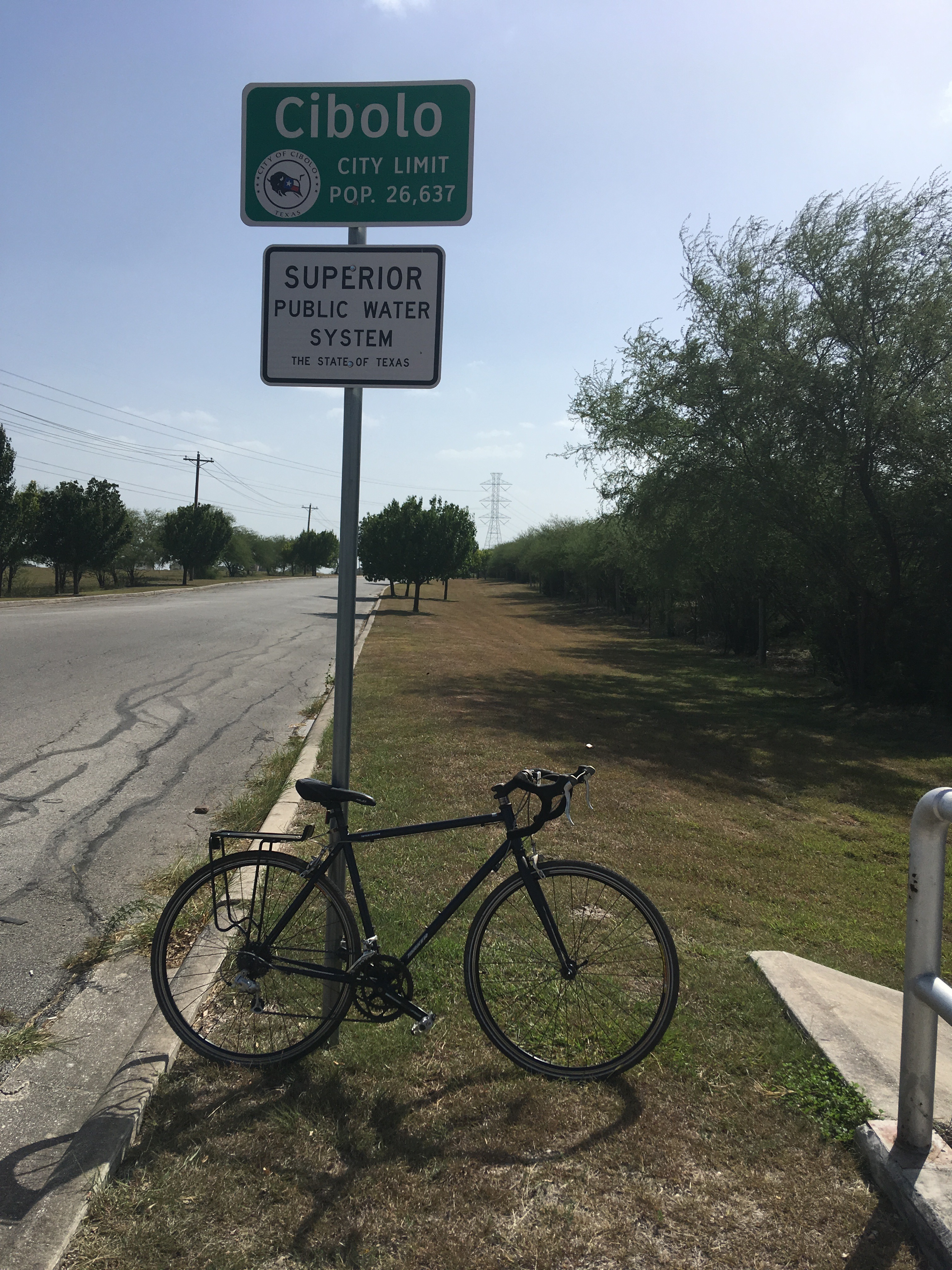 Cibolo city limits. Photo: Jonmallard, CC BY-SA 4.0, via Wikimedia Commons
What to ask for (buyer checklist)
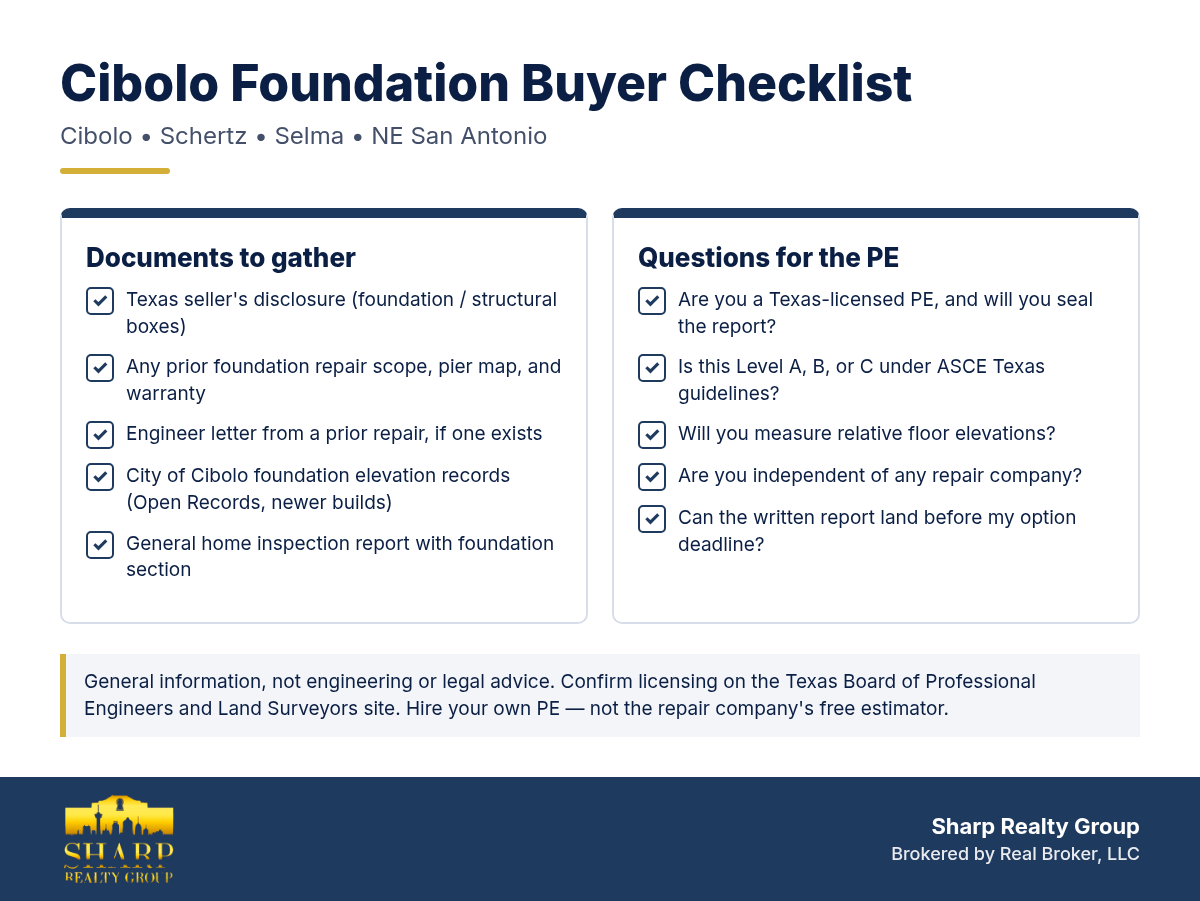
Documents to gather
- Texas seller's disclosure (foundation / structural boxes)
- Any prior foundation repair scope, pier map, and warranty (confirm whether it's transferable)
- An engineer letter from a prior repair, if one exists
- City of Cibolo foundation elevation records for newer builds
- Your general home inspection report, foundation section included
Questions for the PE
- Are you a Texas-licensed PE, and will you seal the report?
- Is this Level A, B, or C under ASCE Texas guidelines?
- Will you measure relative floor elevations?
- Are you independent of any repair company?
- Can the written report land before my option deadline?
 Main Street, Schertz, TX. Photo: Jonmallard, CC BY-SA 4.0, via Wikimedia Commons
Frequently Asked Questions
Do I need a structural engineer on every Cibolo home purchase?
No. Start with a TREC general home inspection. Book a PE when the inspector, the disclosure, or clear red flags say the slab needs a deeper look.
What does a general home inspector check on the foundation?
A limited visual survey and a written opinion on performance, plus visible signs of adverse performance. Inspectors are not required to take elevation measurements or provide engineering services under TREC's Standards of Practice.
How much does a structural engineer foundation inspection cost in Texas?
Published ranges from Texas PE practices commonly run about $350–$1,500 for a residential evaluation, with many standard slab-plus-elevations quotes around $500–$800. Costs vary — get written quotes from several Texas-licensed PEs for your address.
Can I do a foundation engineer inspection during the option period?
Yes. The option period is specifically for due diligence, including specialty inspections. Time the report so you can negotiate or terminate in writing by 5 p.m. on the last day.
Does the City of Cibolo keep foundation records?
For new homes, Ordinance No. 1410 requires post-pour elevation measurements to be submitted to the Building Department. Request records through the City's Open Records process.
The bottom line
Cibolo's clay doesn't mean every house is a problem. It means you should treat the foundation section of the inspection like it matters — because it does. Start with a solid general inspection. Bring in a Texas-licensed PE when the facts on this house call for it. And build your option period so both reports land while you still have an unrestricted way out.
If you're under contract or about to write an offer in Cibolo, Schertz, or Selma, text me the address or send a message through my contact form. I'll help you line up the inspection timeline and the document list before the option clock starts. No pressure, just a clear plan.
Talk soon,
Anthony
About Anthony Sharp: I'm a Realtor with Sharp Realty Group, brokered by Real Broker, LLC. I live in Cibolo and help buyers and sellers across Cibolo, Schertz, Selma, and Northeast San Antonio, including VA and new-construction buyers. I served 9 years active duty in the U.S. Air Force and hold NAR's Military Relocation Professional (MRP) certification.
This post is general information, not engineering, legal, or financial advice. Foundation conditions are property-specific. Confirm inspection scopes with your inspector and a Texas-licensed Professional Engineer, and confirm contract deadlines with your own copy of the TREC contract. TREC Standards of Practice: 22 TAC §535.227–§535.228. Option period overview: Texas Real Estate Research Center. City of Cibolo Ordinance No. 1410: City of Cibolo Foundation Inspections page. Cost figures are published industry ranges, not a quote.
Related reading: Buying a Home in San Antonio 2026 – 10 Mistakes to Avoid · Blue Tape Inspection Checklist for New Builds · Protect Your San Antonio Home From Foundation Issues
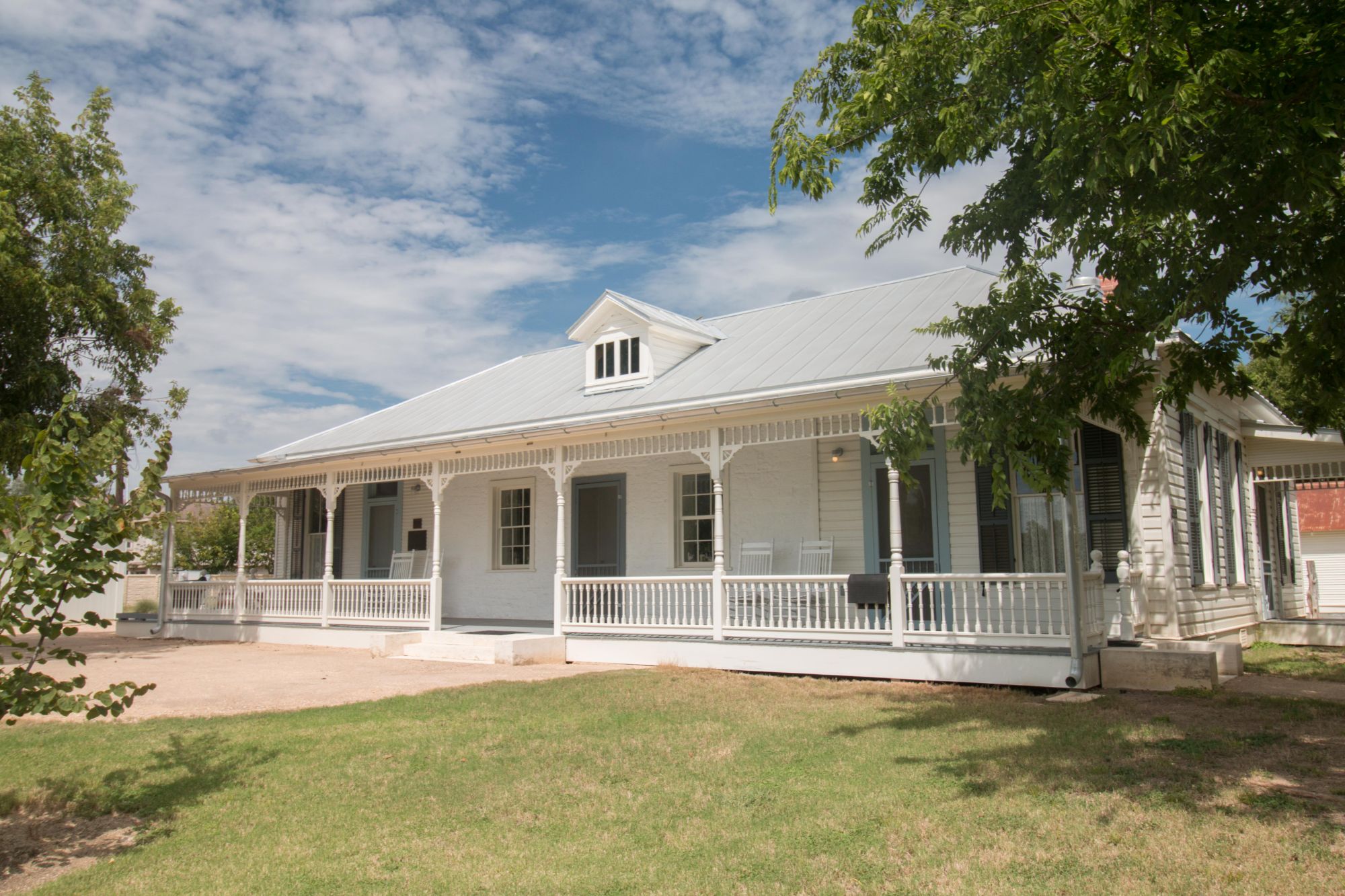 John S. Harrison House, Selma, TX. Photo: Renelibrary, CC BY-SA 4.0, via Wikimedia Commons
Categories
- All Blogs (302)
- BAH (4)
- Buying Process (1)
- Cibolo (1)
- For Home Buyers (208)
- For Home Sellers (96)
- For Investors (45)
- For Military Service Members (199)
- For Renters (10)
- Home Inspections (1)
- JBSA (9)
- Local Events (12)
- Local Real Estate News (40)
- Market Updates (43)
- Military Relocation (46)
- Neighborhood Tours (58)
- PCS Move (118)
- Property Tours (7)
- Schertz (1)
- VA Loans (21)
Recent Posts