
Areas to Avoid in San Antonio, Texas: The 2026 Real Estate Guide You Need Before Moving
If you're thinking about moving to San Antonio, you're probably browsing all those beautiful Texas homes online right now. Before you fall in love with that dream home on Zillow or Realtor.com, hold up, because the truth is you can buy the perfect house in the wrong part of San Antonio.
And when that happens, you could end up listing it again just a year or two later because of traffic, commute, or lifestyle mismatch. I'm Anthony Sharp, a US Air Force veteran, San Antonio Realtor, and Military Relocation Expert with Sharp Realty Group.
I've helped hundreds of families, especially military families PCSing to Fort Sam Houston and Randolph AFB, navigate this massive city and find the right fit. Today, I'm breaking down what areas to avoid in San Antonio and which neighborhoods actually fit your lifestyle.
Watch My Complete San Antonio Neighborhood Breakdown
Before we dive deep, I want you to watch my full video guide where I walk you through San Antonio's five lifestyle zones, traffic nightmares, and hidden gem neighborhoods. This video gives you the visual tour and real talk you need before making one of the biggest decisions of your life.
Watch the full video here:
Ready to make your move to San Antonio? Don't navigate this alone. Contact Sharp Realty Group at sharprealtygrouptx.com for a personalized consultation. As a veteran and Military Relocation Professional, I specialize in helping military families and civilians find the right home in the right neighborhood.
Understanding San Antonio's Size: Why Location Matters More Here
Here's what most people don't realize about San Antonio, it's massive. We're talking the seventh-largest city in the US with neighborhoods that feel like totally different worlds.
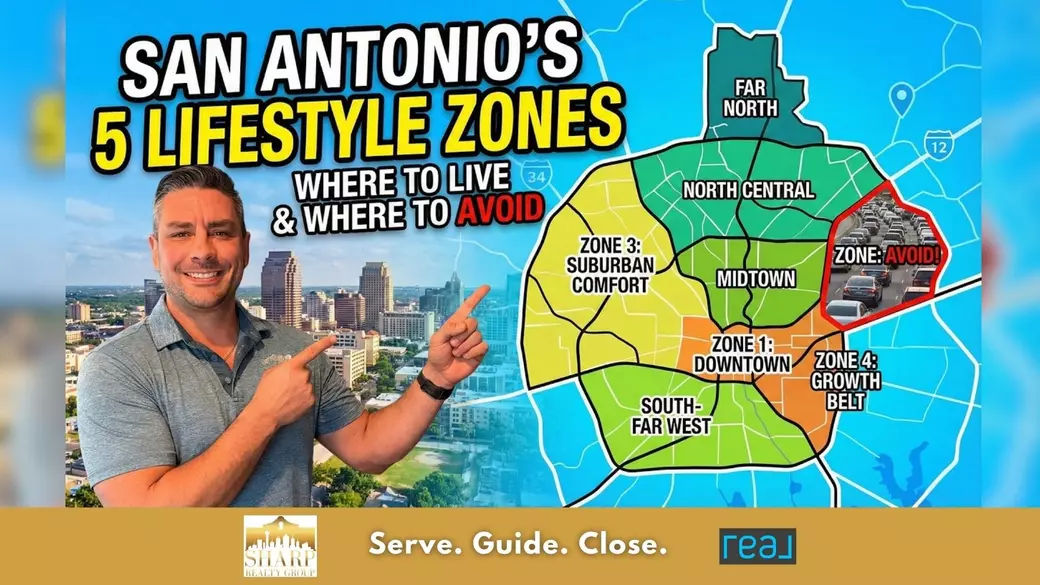
I've broken San Antonio down into what I call the Five Lifestyle Zones. Each zone has distinct characteristics, price points, and lifestyle factors. Missing this crucial step causes more buyer's remorse than any other mistake I see.
Zone 1: Downtown and Inner Loop
This zone is full of culture, nightlife, and history. Areas like The Pearl, Southtown, and King William offer walkability and urban energy.
But parking, noise, and price tags can be real issues. If you love the energy and don't mind paying premium prices for less square footage, this could work for you.
Zone 2: Midtown Inside Loop 410
Think classic homes with tree-lined streets. Alamo Heights, Monte Vista, and Tobin Hill fall here. These areas are beautiful and central, but gentrification is still ongoing in parts.
Zone 3: North Central Loop 1604 Corridor
Stone Oak, Shavano Park, and Hollywood Park represent your suburban comfort zone. You'll find great schools, newer builds, and clean, quiet streets with significantly lower crime rates than the city average.
Zone 4: Far North and Northwest Growth Belts
Bulverde, Helotes, and Fair Oaks Ranch offer newer master-planned communities with tons of space. You'll get hill country charm and larger lots, but prepare for a longer commute.
Zone 5: South and Far West Expansion
These areas are still affordable but quality varies depending on the street. South San Antonio is experiencing a major comeback with new infrastructure investments catching up. It's one of the most affordable areas left with genuine appreciation potential.
Zone 6: Cibolo, Schertz, Selma, and Universal City
This is where I currently live, and it's booming with military communities near Randolph AFB and Fort Sam Houston. If you're PCSing to these bases, I strongly recommend checking out this zone.
Cibolo offers fast-growing developments with new construction. Schertz has a strong established military community, and Selma provides convenient access to both bases with commute times of just 10-20 minutes.
Need help identifying which zone fits your lifestyle and budget? Let's talk. Visit sharprealtygrouptx.com to schedule your free consultation with a Military Relocation Expert who understands VA loans, BAH, and PCS timelines.
Areas to Be Cautious About When House Hunting
Now let's get real about the areas you should approach with extra caution. I'm not saying never buy here, I'm saying do your homework twice.
High Construction Zones
Parts of I-35 and Loop 1604 are under massive expansion until around 2028. If your backyard faces the freeway, you're going to hear jackhammers at 6 AM.
More importantly, resale value can take a hit when buyers see active construction in listing photos. San Antonio drivers lose approximately 50 hours per year sitting in traffic, and construction zones make this worse.
Rapidly Changing Neighborhoods
Areas like Denver Heights and Dignity Hill have tons of potential, but they're still mixed. Some streets feature beautifully renovated homes, while others are still catching up. If you're buying here, walk the specific street at different times of day before signing anything.
Overdeveloped Suburbs
The growth along Bulverde and the 1604 corridor has been insane. You'll find nice homes, but the traffic during peak hours makes you question your life choices. Areas near Loop 1604 and I-10 near La Cantera can double your commute time during rush hour.
The Traffic and Commute Reality Nobody Talks About
One thing people absolutely don't want to hear, San Antonio traffic is real and getting worse. The average commute time sits at 26.2 minutes, but that's city-wide average. Your actual commute could be drastically different.
The worst traffic spots in San Antonio right now are Loop 1604 at I-10 near the Rim and La Cantera, Highway 281 North from the airport to Bulverde, and I-35 North heading toward New Braunfels. I live near I-35 North, and it's absolutely miserable during rush hour.
Before you close on any home, test drive your commute during rush hour. If Google Maps says 25 minutes, plan for 40-50 minutes during peak times. I've had clients back out of contracts after doing this reality check, and they thanked me later.
School Districts and the Rezoning Issue
Another critical factor that catches buyers off guard is school zoning. San Antonio's explosive growth means districts like North Side ISD, NEISD, and Comal ISD redraw boundaries almost every year.
If you've got kids and you're banking on a specific school, go straight to the district's website and pull the latest zoning map. Don't trust the listing description or even your agent's outdated information.
Here's a pro tip: if the school assignment is a dealbreaker, include a clause in your offer that protects you if rezoning happens before closing.
Best Value Areas in San Antonio Right Now
Now for the good part, where you should actually look. These are my top picks for best value neighborhoods in San Antonio based on current market conditions, appreciation potential, and quality of life.
Cibolo
Cibolo offers a northeast area with good schools, family vibe, and still more affordable than Stone Oak. It's fast-growing with new developments and a strong military community feel.
Helotes
Helotes provides quiet hill country charm with a more rural feel. You're still within reach of the city but get nature and space without the Stone Oak price tag.
Bulverde and Spring Branch
Bulverde and Spring Branch offer more rural feel with larger lots and newer construction. These areas work exceptionally well if you work remotely or want more land.
South San Antonio
South San Antonio is still under the radar but growing fast. Infrastructure improvements are catching up, and this remains one of the most affordable areas with genuine long-term potential.
Schertz and Selma
Schertz and Selma are ideal for military families PCSing to Randolph AFB or Fort Sam Houston. They offer established military-friendly neighborhoods and short base commutes of 10-20 minutes.
Frequently Asked Questions
What are the safest neighborhoods in San Antonio?
Stone Oak, Shavano Park, Alamo Heights, Terrell Hills, The Dominion, and Cibolo consistently rank among the safest areas. These neighborhoods feature strong community engagement, excellent schools, and robust infrastructure.
What areas should military families avoid in San Antonio?
Military families should be cautious about areas with long commutes to base during peak traffic hours and neighborhoods with higher crime rates on the east side. Focus instead on Cibolo, Schertz, Selma, and Universal City near Randolph, or Terrell Hills and Windcrest near Fort Sam Houston.
How long is the average commute in San Antonio?
The average commute time is 26.2 minutes city-wide, but this varies dramatically by area. Areas near Loop 1604 and I-10, Highway 281 North, and I-35 North experience significantly longer commute times during rush hour, often doubling the off-peak estimates.
What's the best area for families with kids in San Antonio?
Stone Oak, Alamo Heights, Shavano Park, and the Cibolo-Schertz-Selma corridor offer the best combination of top-rated schools, low crime rates, and family-friendly amenities. These areas are served by excellent school districts including NEISD and Alamo Heights ISD.
Real Talk: Every Area Has Trade-Offs
Let's be honest, you'll never find a perfect area. But you can definitely find the one that's perfect for you.
Do your research beyond the Instagram-worthy photos. Test your commute routes during rush hour. Walk the neighborhood at different times of day.
The right home in the wrong neighborhood can become your biggest regret. I've seen it happen, and I've helped families avoid that mistake hundreds of times.
San Antonio is an incredible city with opportunities for every lifestyle and budget. As both a veteran who served this country and a Realtor who serves this community, I'm committed to helping you make the sharp move, not just any move.
Ready to find your perfect San Antonio neighborhood? Don't leave this decision to chance. Contact Anthony Sharp at Sharp Realty Group today. Visit sharprealtygrouptx.com/consult or call us directly. As a Military Relocation Professional and local expert, I'll help you navigate VA loans, BAH calculations, PCS timelines, and find the neighborhood that truly fits your family's needs.

Categories
- All Blogs (266)
- BAH (3)
- For Home Buyers (185)
- For Home Sellers (89)
- For Investors (41)
- For Military Service Members (178)
- For Renters (9)
- JBSA (6)
- Local Events (12)
- Local Real Estate News (39)
- Market Updates (41)
- Military Relocation (40)
- Neighborhood Tours (57)
- PCS Move (105)
- Property Tours (5)
- VA Loans (12)
Recent Posts