
Down Payment Assistance Programs in San Antonio 2026 Guide
If you're trying to buy your first home in San Antonio in 2026, the down payment is almost always the wall you hit before the rate, the inspection, or anything else. The good news: between the State of Texas, the City of San Antonio, and your VA benefits, there is real money on the table — and most buyers I talk to have no idea they qualify.
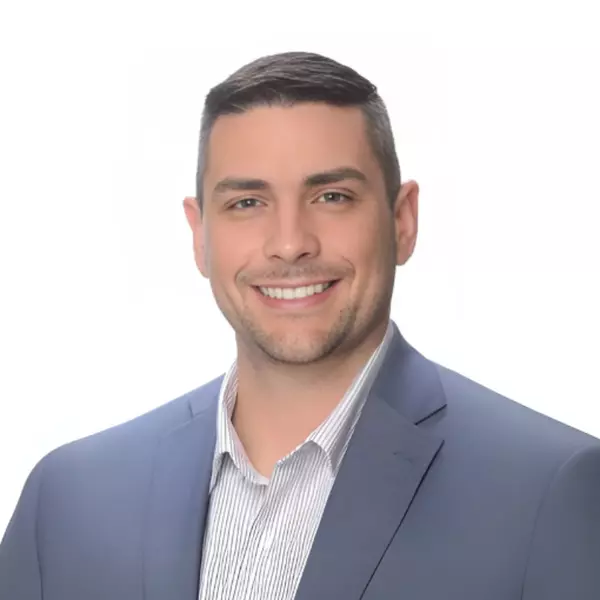
I'm Anthony Sharp — U.S. Air Force veteran, REALTOR® with Sharp Realty Group, and a Cibolo Planning & Zoning board member who has lived in this corridor for over six years. I work with PCS families landing at JBSA and first-time buyers all over the northeast San Antonio market, and I write this guide every year because the rules and dollar amounts shift. Here is what is actually available right now for buyers in San Antonio, Cibolo, Schertz, Converse, Selma, Universal City, and the surrounding corridor.
Why Down Payment Assistance Matters More Than Ever in 2026
The median sale price across the greater San Antonio area is sitting in the high $300Ks, and our northeast suburbs — Cibolo, Schertz, Universal City — are pushing $390K–$420K depending on the zip code. On a $400,000 home, here is what a buyer is staring at without help:
- 3.5% FHA down: $14,000 cash to close, plus closing costs of $8,000–$12,000.
- 5% conventional down: $20,000 plus closing costs.
- 0% VA loan: Still $8,000–$12,000 in closing costs unless you negotiate a seller credit.
For a buyer making $75K–$95K a year, that is the difference between closing on a home this summer and renting for another two years. Down payment assistance (DPA) closes that gap. Some of these programs are grants — meaning you never pay them back — and some are forgivable second liens that disappear if you stay in the home a few years.
TSAHC Homes for Texas Heroes — Built for the People Who Make This City Work
The Texas State Affordable Housing Corporation runs the Homes for Texas Heroes program, and if you are an eligible "hero," this is the one I push first. Eligible professions include active-duty military and veterans, teachers, school librarians and nurses, peace officers, firefighters, EMS personnel, and corrections officers. Big chunk of my JBSA buyer list qualifies on day one.
Here is what you actually get:
- A 30-year fixed-rate mortgage paired with 3% to 5% of the loan amount as down payment and closing-cost assistance.
- Option to take it as a true grant (never repay) or as a forgivable second lien.
- On a $350,000 loan, that is roughly $10,500 to $17,500 toward your closing.
- Works with FHA, VA, USDA, and conventional loans.
You do not have to be a first-time buyer to use Homes for Texas Heroes. You also do not have to repay the grant version, even if you sell next year. Income and purchase-price limits apply by county, and Bexar, Guadalupe, and Comal all have their own caps — your lender will confirm whether your scenario fits. Full program details live at the TSAHC Homes for Texas Heroes page.
TDHCA My First Texas Home — The Statewide First-Time Buyer Workhorse
If you don't qualify as a "hero" but it has been at least three years since you owned a home, the TDHCA My First Texas Home program is the next move. This is the Texas Department of Housing and Community Affairs' main first-time buyer product and it is updated quarterly — the most recent rate sheet I checked is from May 2026.
- Up to 5% of the loan amount in down payment and closing cost assistance.
- Often delivered as a gift with no repayment required.
- 30-year fixed mortgage, FHA / VA / USDA / conventional eligible.
- Veterans are exempt from the first-time buyer requirement — meaning you can use it on your second or third home as a vet.
- Often pairs with the Mortgage Credit Certificate (MCC), which gives you a federal tax credit of up to $2,000 a year for as long as you live in the home.
The MCC piece gets overlooked a lot. On a 30-year mortgage, that is potentially $60,000 in tax credits over the life of the loan. I had a client in Schertz pair My First Texas Home with the MCC last year and it dropped their effective monthly payment by almost $170. Find the latest TDHCA rate sheet and program details at The Texas Homebuyer Program.
City of San Antonio HIP 80 and HIP 120 — Local Money for Inside-City-Limit Buyers

This is the one most buyers don't know about. The City of San Antonio runs the Homeownership Incentive Program (HIP) for purchases inside San Antonio city limits. There are two tiers based on income:
- HIP 80: For households at or below 80% of the area median income. Provides $1,000 to $30,000 at 0% interest, with a forgiveness schedule of 5 to 10 years depending on the assistance amount. Stay in the home, and you owe nothing.
- HIP 120: For households between 81% and 120% AMI. Provides $1,000 to $15,000 at 0% interest with a similar forgiveness structure.
Important: HIP only applies inside actual San Antonio city limits — so it works in places like Stone Oak, Alamo Heights-adjacent areas, and parts of north central SA, but it does not apply to Cibolo, Schertz, Selma, Universal City, or most of Converse, since those are separate municipalities. Buyers always ask me this. If your dream home is in Turning Stone or Northcliffe, HIP isn't the play — TSAHC or TDHCA will be.
For full eligibility, see the City of San Antonio HIP page.
Stacking the VA Loan With Down Payment Assistance — The Move I Recommend Most for JBSA Buyers
If you're active-duty, a veteran, or a surviving spouse, your VA loan benefit already gets you to zero down. So why would you bother with DPA? Two reasons:
- Closing costs. VA still has them — title, escrow, inspection, appraisal, recording fees, prepaid taxes and insurance. On a $400K Cibolo home, expect $8,000–$12,000.
- Cash reserves. Walking into a new home with $0 in the bank is a recipe for stress when the AC goes out in August. DPA lets you keep your savings.
The combo I run for my PCS clients most often: VA loan + TSAHC Homes for Texas Heroes grant + a negotiated 1%–3% seller credit toward closing. On the right deal, that gets a JBSA family into a home in Cibolo or Schertz with essentially no out-of-pocket cash beyond earnest money and the inspection. I just helped two new construction VA buyers in this market do exactly that — both closed organically off Google leads, and both walked in with under $2,000 of their own money.
One word of caution if you are PCSing: lender selection matters. Not every lender on JBSA is approved with TSAHC or TDHCA. Use a lender that does both Texas DPA programs and VA — otherwise you'll get told it "can't be done." It absolutely can.
How to Qualify and What I Tell My Clients to Do First
Here is the honest order of operations for a buyer in 2026:
- Pull your credit and check your scores. Most DPA programs need a 620+ FICO. VA is more flexible but lenders still set overlays.
- Get pre-approved with a DPA-experienced lender. I have a short list of two I trust in this market — ask me, I'll send names.
- Take the homebuyer education course. Both TSAHC and TDHCA require an online course — usually 6–8 hours, costs around $99, and you can knock it out in a weekend.
- Map your target neighborhood to the right program. Inside SA city limits → HIP first. Cibolo / Schertz / Universal City / Selma → TSAHC or TDHCA. Rural pockets of east Bexar or Guadalupe → check USDA 0% down on top of DPA.
- Tour homes only after you know your number. I won't show buyers homes before they're pre-approved — not because I'm gatekeeping, but because falling in love with a $450K home when your real ceiling is $375K is the fastest way to ruin your year.
One last thing. I own and self-manage 16 rentals myself, so I get the investor side too — but for a primary residence, these DPA programs are simply the cleanest way to lower your cash-to-close. They are not a gimmick, they are not a "catch," and the only reason most buyers don't use them is that nobody told them they existed.
Ready to See What You Qualify For?
If you're a first-time buyer, a PCS family heading to JBSA, or a Cibolo / Schertz neighbor thinking about moving up, I'll personally walk you through which DPA program fits your situation, get you connected with a lender who knows them, and map out a realistic timeline. No pressure, no spam, no cold calls — that's not how I work.
You can text or call me directly at (210) 997-0763, email anthony@sharprealtygrouptx.com, or grab a free 20-minute consult on my calendar at sharprealtygrouptx.com/consult.
While you're here, two related reads from the blog: Sell My House in Cibolo Fast and our Cost of Selling a Home in San Antonio guide. And if you want to start house-hunting now, check our Featured San Antonio Homes for Sale.
— Anthony Sharp, REALTOR®, Sharp Realty Group, Real Broker LLC. License #734794.
Categories
- All Blogs (254)
- BAH (3)
- For Home Buyers (174)
- For Home Sellers (85)
- For Investors (41)
- For Military Service Members (170)
- For Renters (9)
- JBSA (6)
- Local Events (12)
- Local Real Estate News (38)
- Market Updates (40)
- Military Relocation (36)
- Neighborhood Tours (55)
- PCS Move (103)
- Property Tours (4)
- VA Loans (10)
Recent Posts